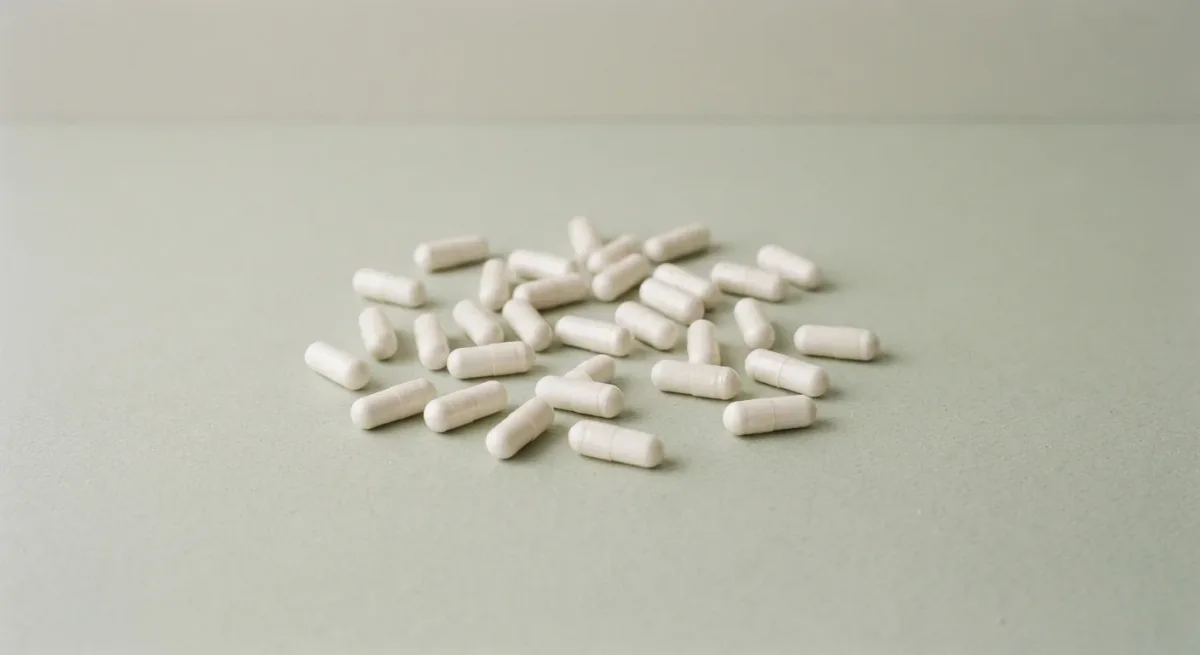
N-acetylcysteine — NAC — returned to legal dietary-supplement status in the US when the FDA announced in April 2024 that it does not object to its use in supplements under specified conditions, resolving a 2020 position under which the agency had deemed NAC an excluded drug ingredient, per the FDA's own guidance documents. The reversal followed industry lawsuits and a 2022 congressional directive, per public court filings and the appropriations language. For people who use the product: availability widened, label claims did not — and the efficacy evidence remains narrower than the shelf presence suggests. This is information, not medical advice.
Why the 2020 decision mattered: NAC was first marketed as a drug (a mucolytic, in 1963, and later an acetaminophen-overdose treatment), and federal law excludes ingredients marketed as drugs before 1994 from supplements unless the government specifically allows it — the FDA's reading of that clause pulled NAC products into enforcement limbo, and Amazon delisted the ingredient during the period, per contemporaneous industry reporting.
What does the FDA's new position actually say?
That the agency will exercise enforcement discretion for NAC in dietary supplements, per the 2024 final guidance — a policy decision, not an approval, and the distinction is the news. The guidance follows the same path the FDA took with CBD's separate 2025-era flexibilities: Congress pressed, the agency declined to formally designate NAC as a lawful dietary ingredient, and the practical outcome is shelves restocked under a stated non-enforcement posture, per the guidance's own language. What that means for a consumer is structural: products are on the market without the pre-market safety and efficacy review drugs receive — the standard supplement-regulation caveat, which the FDA states plainly in its own materials on the category.
What is the evidence on NAC itself?
Narrow, and unchanged by the policy news. As a drug, NAC's uses are established medicine — acetaminophen overdose and as a mucolytic, per drug labeling. As a supplement, the claims that filled the shelf gap — fertility support in women with PCOS (a 2022 meta-analysis of small trials found some signal in ovulation, with low-quality evidence), obsessive-compulsive symptoms (small trials, mixed results), and exercise recovery (limited, inconsistent) — are early-stage findings, each with the population and quality caveats noted. No large, replicated trial supports general wellness claims. The policy change affected access, not evidence; the studies are what they were.
What should someone who uses NAC take from this?
Three facts. Availability is resolved under the stated discretion policy — check labels for third-party certification, the standard quality workaround in a category without pre-market FDA review, per NIH guidance. Drug uses are separate: prescription NAC remains a medicine with its own labeling. And interactions exist — NAC interacts with certain blood-pressure and clotting medications, per the NIH's interaction documentation — which is a clinician conversation, not a shelf decision. What the record establishes: a legal-status story that took four years and a lawsuit. What it does not establish: new evidence — that part of the label was never the FDA's to give.
For more context, read How creatine works, and where the evidence stops.