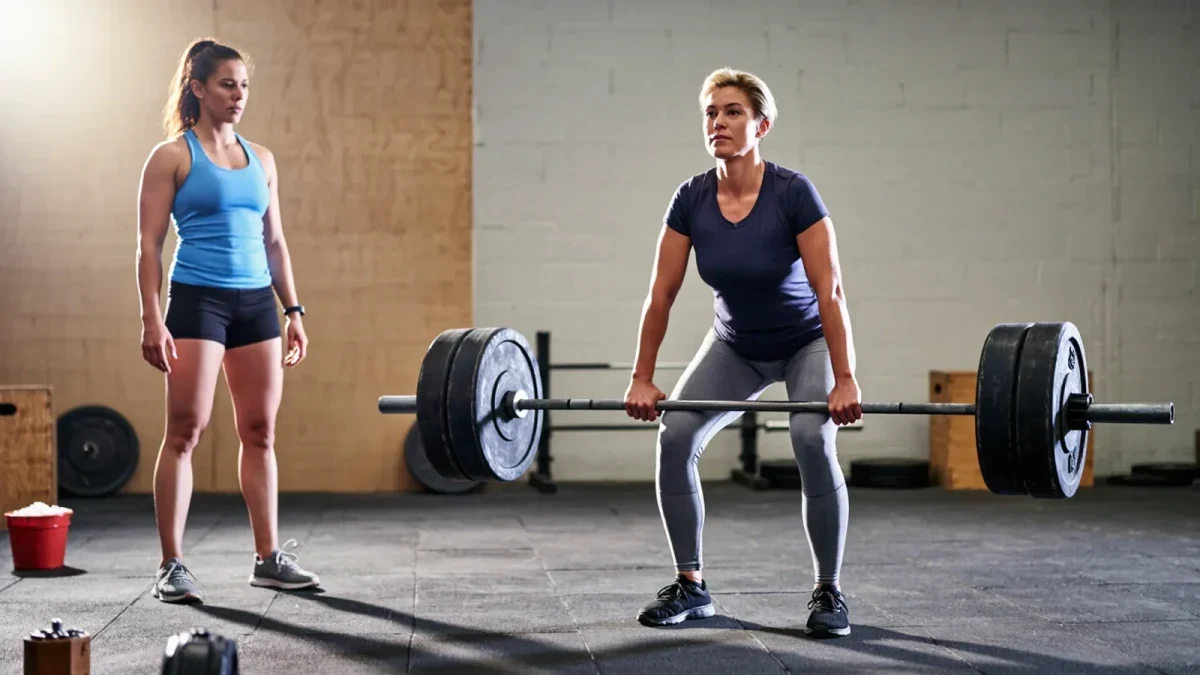
Progressive overload is the planned, gradual increase of a training stimulus — more weight, more repetitions, or more sets — that keeps muscle and strength adapting after the beginner phase ends. The American College of Sports Medicine's progression position stand, first published in 2002, treats systematic progression as a core principle of program design for healthy adults. Without it, adaptation typically slows to a plateau within months.
24 News Click publishes information, not medical or training advice. Individual programming decisions belong with a qualified exercise professional and, where health conditions exist, a clinician.
What is progressive overload in practical terms?
Progressive overload is the practice of making training slightly harder over time so the body keeps adapting. The ACSM position stand on progression models in resistance training, authored by Kraemer and colleagues, recommends that healthy adults increase load when a target number of repetitions can be completed with good technique. In research on older adults by Borde and colleagues in 2015, published in PLOS ONE, increments of roughly 2 to 10 percent were used as the working rule once a repetition target was met. The principle is the same at any age: a stimulus that once forced adaptation becomes maintenance once the body has adapted to it.
Three variables carry most of the load in practice: the weight on the bar, the number of repetitions per set, and the number of sets per session. A fourth — rest between sets — modifies how much total work a lifter can do, and is covered in growing detail by later research. Overload does not require all of these to rise at once. It requires one of them to rise, then another, in a planned sequence.
How much weight should be added each time?
Small increments beat large ones for most lifters. The 2015 Borde analysis of dose-response data in older adults used progression steps of about 2 percent for exercises with small muscles and up to 10 percent for large-muscle exercises, applied only after the repetition target was reached with acceptable form. Kraemer's position stand similarly describes gradual load increases for novices — often manageable with the smallest available plate or dumbbell jump.
The reason is mechanical as much as physiological. Commercial gyms usually offer plate jumps of 2.5 to 5 kilograms per side, which can represent a 5 to 20 percent jump on a small lift. Where smaller plates or fractional loading are unavailable, adding a repetition before adding weight keeps the progression continuous. This is sometimes called double progression: hold the weight fixed, add reps week to week until the top of a prescribed range is reached, then increase the weight and return to the bottom of the range.
No study demonstrates an ideal universal increment. The evidence describes ranges that worked in supervised settings, not prescriptions for unsupervised lifters.
Does progression have to mean heavier weight?
No. When total training volume is matched, heavier loads are not required for muscle growth — they are one route among several. A 2016 controlled trial by Morton and colleagues at McMaster University, published in the Journal of Applied Physiology, compared training at roughly 30 percent of one-repetition maximum versus about 80 percent in 49 young men over 12 weeks. When sets were taken close to failure and volume was equated, muscle growth was similar between groups. Strength gains, however, were greater in the heavier-load group — strength is partly a skill of handling heavy loads.
That trial's practical reading is widely repeated in the research literature: the overload must increase somewhere, but the lifter or coach chooses where. More repetitions at the same weight is overload. More sets at the same weight is overload. A slower tempo under control is a weaker and less studied form of overload, and the evidence for it as a primary driver is thin.
What happens when training never progresses?
Adaptation stalls at the level the stimulus maintains. Long-term studies of resistance training consistently show rapid early gains in both strength and muscle size, followed by marked slowing — the shape researchers call a decelerating dose-response curve. Schoenfeld's 2017 meta-analysis of hypertrophy training found that gains continue to accumulate over months of consistent training, but at decreasing rates, which is why progression and patience are both required.
Maintenance, by contrast, is cheap. Research on detraining and maintenance — including trials summarized in the ACSM position stand — shows trained muscle and strength can be held with reduced volume, roughly a third to a half of building-phase volume in several studies. That asymmetry is useful: building requires progressive overload, maintaining does not.
There is no evidence that a stalled program is harmful. It is simply no longer a building program.
How do lifters know the next increment is due?
Rep targets met with repetition-in-reserve are the common research-based cue. Zourdos and colleagues validated a repetitions-in-reserve scale in 2016 in the Journal of Strength and Conditioning Research: lifters could estimate, with usable accuracy, how many more reps they had left before failure. Programs in the research literature typically prescribe progression when the top of a rep range is reached while one or two reps still feel available.
Tracking makes the principle enforceable. A written log of weight, reps, and sets turns an abstract rule into a checkable condition: either the numbers rose over the past weeks or they did not. Reviews of real-world training data consistently show that untracked training drifts toward comfortable, unchanging loads.
Where does progressive overload stop working?
It stops yielding equal returns, though it never stops mattering entirely. Near a lifter's genetic ceiling, the same 2 to 10 percent steps take longer to earn, and recovery capacity — sleep, stress, nutrition — becomes the limiting variable rather than the stimulus itself. The evidence base offers no shortcut here: trials in advanced lifters are scarce, and most progression data comes from novices and intermediates studied over 8 to 16 weeks.
The honest summary is that progressive overload is the best-documented principle in resistance training, and the exact size and frequency of its increments remain matters of individual response. The research supports small, patient, measured increases; it does not support any single formula for everyone.
Quick comparison: levers of overload
| Lever | Evidence summary | Typical research step |
|---|---|---|
| Load (weight) | Reliable driver of strength; growth similar at moderate vs heavy loads when volume equated (Morton, 2016) | 2–10% after rep target met |
| Repetitions | Adds volume at fixed load; basis of double progression | +1 rep per set per week or two |
| Sets | More weekly sets associated with more growth up to a plateau region (Schoenfeld, 2017) | +1 set per exercise per week |
| Rest between sets | Longer rests permit more volume load per session (Schoenfeld, 2016) | 1 min to 2–3 min |
FAQ
How fast should a beginner add weight?
Beginners in supervised research settings often progress load every one to two weeks on major lifts, using the smallest increment available once a rep target is met with clean technique. The 2002 ACSM position stand describes exactly this pattern. Rates vary widely between individuals, and no trial supports a fixed weekly number for everyone.
Can progressive overload happen without adding weight?
Yes. Adding repetitions or sets at a fixed weight is overload. In the 2016 Morton trial, similar muscle growth occurred at light and heavy loads when volume was equated and sets approached failure, which shows the stimulus can grow through volume rather than load alone.
Is progressive overload only for bodybuilders?
No. The principle applies to bone density, tendon, and general-health outcomes, and the Borde 2015 analysis concerned older adults, not physique athletes. Any tissue that adapts to loading requires the loading to increase over time to keep adapting.
What if progress stalls for several weeks?
A multi-week stall usually means the stimulus, recovery, or both need review — not that overload failed. Evidence on maintenance shows trained muscle can be held at reduced volume, so a deliberate reduction week followed by a return to progression is a common, low-risk response discussed in the training-literature.