Drinking after training works against recovery in measurable ways. In controlled trials, alcohol consumed after resistance exercise reduced myofibrillar muscle protein synthesis — the process that drives muscle repair and growth — by roughly a quarter to over a third, and in studies with team-sport athletes, heavy drinking sessions degraded sprint performance the next day. Effects scale with dose; small amounts show small or unclear effects.
24 News Click publishes information, not medical advice. Questions about alcohol and health belong with a qualified clinician.
What is the key protein synthesis study?
The most direct evidence comes from a trial by Evelyn Parr and colleagues at the Australian Institute of Sport and Victoria University, published in PLoS ONE in 2014. Eight physically active men completed a workout of resistance exercise and interval cycling, then drank alcohol — roughly 1.5 grams per kilogram of body weight, a binge-scale dose — either alone or with protein, while control sessions matched food and protein without alcohol. Muscle biopsies tracked synthesis of myofibrillar protein over the recovery window.
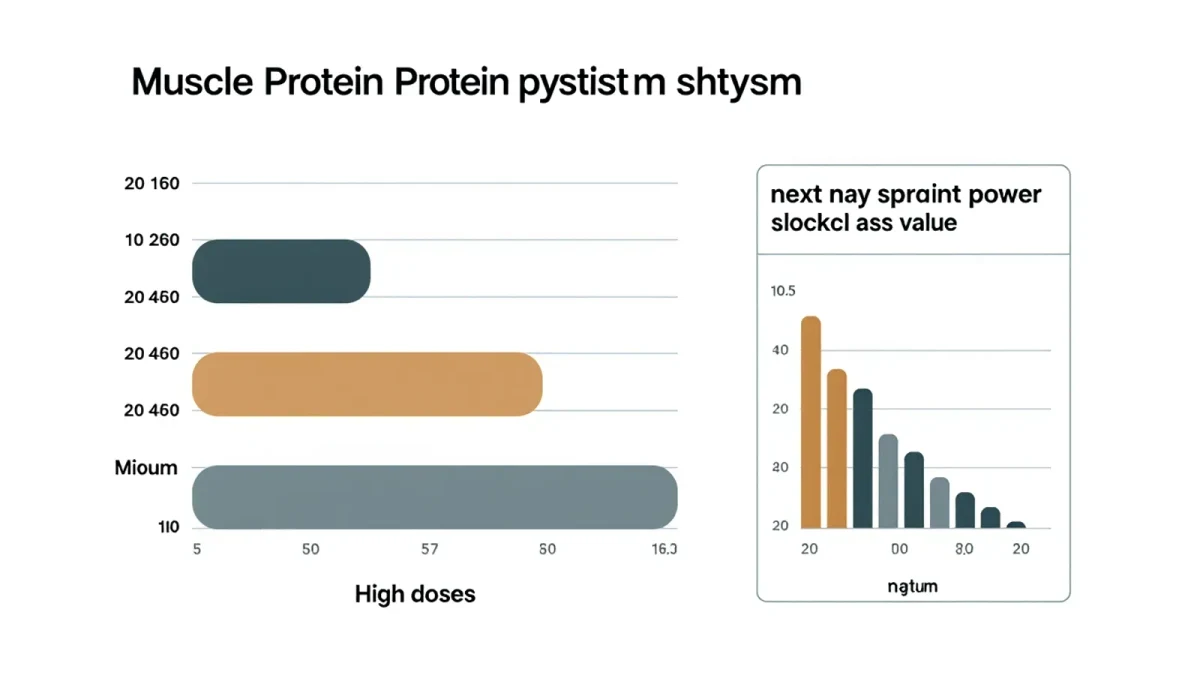
Alcohol cut myofibrillar protein synthesis by around 24 percent when taken with protein, and by around 37 percent when taken alone, compared with the alcohol-free control. The practical takeaway was blunt: even with protein co-ingestion, a large drinking session after training substantially suppressed the repair process the training was meant to stimulate. The sample was eight men in a laboratory setting — small, but the design was controlled crossover, each man completing all conditions.
What happens to performance the next day?
Field-style trials with team athletes point the same direction. A study by Matthew Barnes and colleagues at Massey University, published in the Journal of Science and Medicine in Sport in 2010, had rugby union players complete a match simulation and then drink either a substantial alcohol dose or a non-alcoholic match, with performance tested before and after. The alcohol condition produced clear decrements in sprint output the following day, with lower-body power measurably reduced.
Notably, in the same line of research, drinking affected performance even when the exercise itself was light — suggesting alcohol's next-day drag is not simply compounded muscle damage but alcohol's own effects on sleep, hydration and the nervous system.
Does alcohol disrupt sleep and hormones?
Yes, and that matters for athletes specifically. Alcohol shortens sleep latency but fragments the second half of the night and suppresses REM sleep — documented across sleep laboratory studies and summarized by institutes including the National Institute on Alcohol Abuse and Alcoholism. Since slow-wave and REM sleep concentrate recovery-related hormone pulses, the sleep route alone gives alcohol a second channel to interfere with adaptation.
On hormones, laboratory studies have found that intoxication-scale doses acutely disturb the testosterone-to-cortisol ratio and can suppress testosterone output for hours after intake. The exercise-relevance of these short-term shifts is less established than the protein synthesis findings; they are consistent with, but not proof of, impaired adaptation.
Is there a safe amount after training?
The trial record offers no clean threshold. Effects in the Parr study appeared at a high dose — roughly eight to ten standard drinks for an 80-kilogram man — while smaller doses, around one to two drinks, have not been shown to meaningfully impair muscle protein synthesis in the available research. The honest statement is that harm scales with dose, the strongest evidence covers binge-scale intake, and moderate intake shows small or uncertain effects. That is a description of the data, not a recommendation.
- High dose after training (about 1.5 g/kg): myofibrillar protein synthesis down 24 to 37 percent (Parr et al., 2014).
- Team-sport drinking night: next-day sprint and lower-body power reduced (Barnes et al., 2010).
- Moderate doses: no clear impairment demonstrated, but also not well studied.
Do common fixes offset the damage?
The fixes athletes actually use — water, electrolytes, a protein feed before bed — have not been shown to neutralize alcohol's recovery effects. In the Parr trial, protein co-ingestion still left synthesis substantially suppressed. Hydration addresses the diuretic and fluid side of alcohol but not the synthetic suppression or sleep fragmentation. Marketing for various recovery drinks aimed at drinking nights rests on no published performance evidence.
What about alcohol and glycogen or hydration?
Two older concerns round out the picture. Early laboratory studies from the 1990s and 2000s suggested alcohol can slow glycogen resynthesis — the restocking of muscle carbohydrate stores after exercise — when carbohydrate intake is marginal, though adequate carbohydrate intake appears to largely override this effect. For endurance athletes counting on full glycogen stores for the next session, the practical relevance depends on total intake, and the measured impairment was modest.
Hydration is simpler: alcohol is a diuretic, increasing urine output precisely when rehydration is the goal. Sports-medicine guidance for post-exercise rehydration, including position statements from sports-nutrition bodies, treats alcoholic drinks as counterproductive to fluid restoration. None of the folklore fixes — coffee, cold showers, electrolyte drinks — restore synthesis or sleep architecture; they address symptoms at best.
How does alcohol interact with different training goals?
The protein synthesis data matter most for strength and muscle goals, where post-training hours are precisely when repair and remodeling run. For endurance athletes, the evidence leans on hydration, sleep disruption and next-day output rather than direct muscle-building measures. A single moderate drink after a Sunday long run is not what the trials describe; regular heavy nights after hard sessions are.
| Recovery process | Effect of post-exercise alcohol | Evidence |
|---|---|---|
| Muscle protein synthesis | Suppressed 24-37% at high dose | Parr et al., PLoS ONE, 2014 |
| Next-day power and sprinting | Reduced after heavy drinking | Barnes et al., J Sci Med Sport, 2010 |
| Sleep architecture | REM suppressed, second-half fragmentation | Sleep laboratory literature, NIAAA |
| Hydration | Diuretic effect adds to fluid losses | Established alcohol physiology |
What do the numbers mean for a typical training week?
Putting dose in everyday terms helps read the studies honestly. The high-dose condition in the Parr trial — 1.5 grams of alcohol per kilogram — is roughly eight standard drinks for an 80-kilogram man, the scale of a heavy night out, not a beer with dinner. The Barnes rugby studies used doses of a similar order. What the literature describes with confidence is therefore the post-match binge pattern, common enough in team sports that the Australian researchers framed their work in exactly those terms.
Between that pattern and total abstinence lies a wide zone — one or two drinks a few times weekly — where recovery effects have not been clearly demonstrated in either direction. Athletes filling that zone with guesses should know it is a gap in the evidence, not a proven-safe window.
One last framing: the strongest evidence concerns binge-scale drinking immediately after hard training, not the occasional drink days later. Reading the trials closely protects against both dismissing and exaggerating the effect.
Practical reading of the evidence
The research does not say an athlete must never drink. It says heavy drinking close to hard training measurably suppresses muscle repair, degrades next-day output, and fragments the sleep that recovery depends on, with the clearest damage at binge-scale doses. Anyone weighing regular alcohol use against training goals — or against health generally — should treat it as a medical and personal decision with a clinician's input where appropriate, not as a sports-science optimization problem.