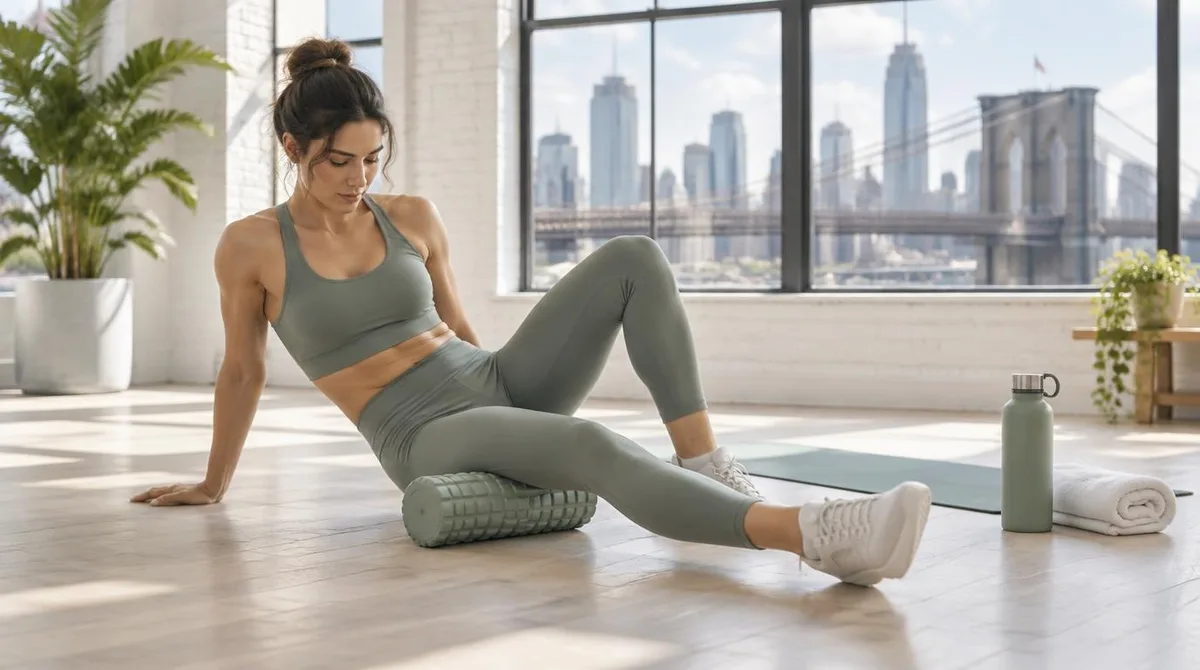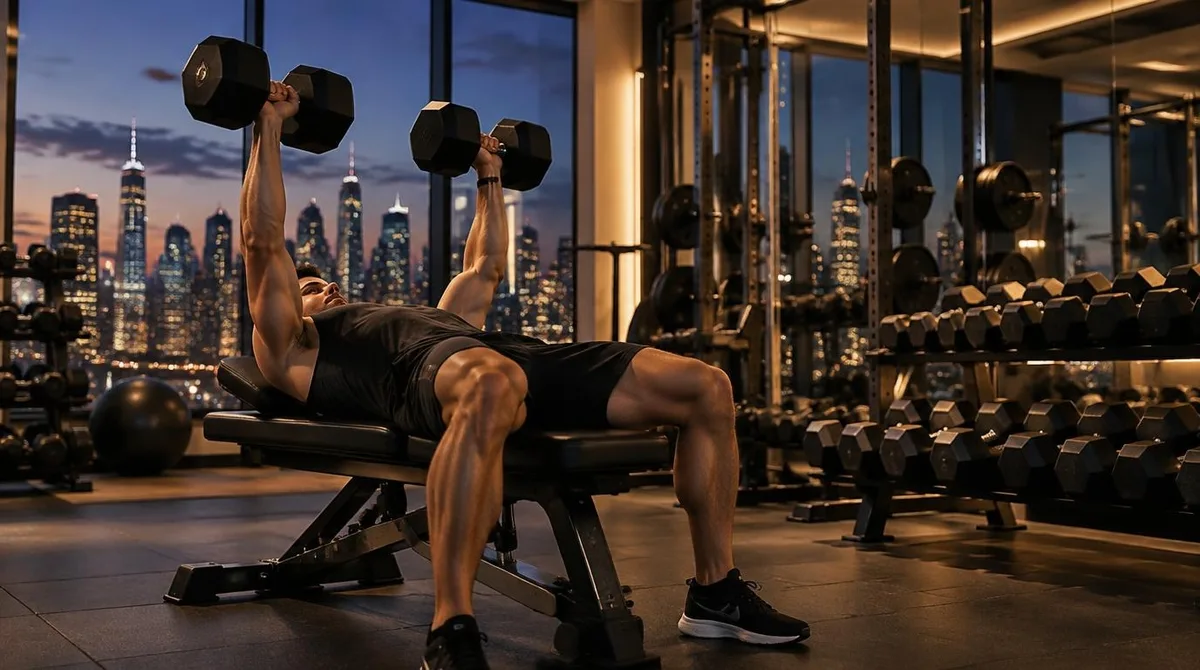
The decisive moment here is not a piece of equipment. It is a shift in what a hotel guest counts as essential. According to Hotel Business, maintaining a fitness routine on the road has moved from convenience to expectation, and travelers increasingly want hotel facilities to match the quality and atmosphere they train with at home. Equipment maker Life Fitness/Hammer Strength is positioning itself to help hotels respond, and its strategy tells us where hotel fitness is heading.
For anyone who trains seriously and travels, this matters more than a press release suggests. A hotel gym that was once a row of machines in a windowless basement is becoming a designed space, chosen for the guests a specific property expects. That changes what a traveling athlete can realistically get done between sessions. We covered a connected angle in Seb Coe runs at a $28-a-month gym. That says something..
Anthony Schreiber, vice president of global vertical sales at Life Fitness/Hammer Strength, framed the change as a move from wealth to well-being. "It's shifted less from assets and wealth to longevity," he said, per Hotel Business. "And longevity in the sense that it's not just living longer in terms of a number, but it's living well."
Why are hotel gyms changing now?
Because the guests changed first. Affluent travelers, many with sophisticated home gyms or premium club memberships, expect continuity. "The expectation is that when you're traveling, you don't miss a beat," Schreiber said. The analysis for hotel operators is blunt: a fitness facility that feels like an afterthought now works against the property's positioning, not just beside it.
For years, Schreiber noted, fitness centers were treated as cost centers, with equipment placed wherever leftover space allowed. The new argument is that these spaces can contribute to how a property competes. Lighting, flooring, acoustics, air quality, colors and equipment finishes are all named as part of that environment. "What you smell, what you see with your eyes, what you hear, how the acoustics are in the facility, how the lighting's going to dramatically drive how you feel — all of that needs to complement what the DNA of the hotel is," he said.
That is a notable reframing. The equipment contract is no longer about machines. It is about whether the room makes a guest want to train at all. Regulars know the difference: a gym that feels like a corridor discourages a session, and a skipped session on the road has knock-on costs for recovery and consistency.
What does a better hotel gym actually include?
Two things, in the company's telling: looks and function. Schreiber described the target as "performance in luxury" — spaces that look the part but still deliver for serious fitness users. "It can't just look good; it's got to function at a high level," he said.
On the cardio side, the mix goes beyond treadmills and stationary bikes to stair climbers, cross-trainers, rowers and other options that reflect changing preferences. On strength, the stated requirement is coverage of major muscle groups through free weights, cable systems, racks, benches and functional training stations. "You have to have a baseline core competency of your muscle groups, not just the ones that are in trend, but what an individual would want to do when they're traveling," Schreiber said.
That last line is the one worth holding onto. Trend equipment sells a look; a rack and a bench sell a training week. The gap between the two is exactly what frequent travelers notice first.
How does the customization process work?
The company says its approach starts before any equipment order. It begins with market trends and guest demographics, builds what Schreiber calls personas, and then translates a property's identity into design — colors, materials, space allocation and equipment selection. Even hotels under the same brand can have distinct identities, he argued, so a standard package fits poorly.
The constraint that shapes all of it is time. "Most hotels hold on to their equipment for 10 years at least," Schreiber said. "So when you outfit a hotel, you better be willing to stand the test of time." A facility designed around this year's exercise fad has a long shelf life to regret.
To reach the people making those decisions, the company has published a design lookbook aimed at architects and interior designers, meant to show its role extends past manufacturing. "We don't just make equipment and put" — the source text cuts off mid-sentence there, so the full claim is not available, but the documented intent is to present the company as a design partner, not a supplier.
What does this mean for travelers who train?
Three implications, all supported by the reporting. First, the floor is rising: properties competing at the top end are being advised to treat the gym as part of the guest experience, on par with rooms, restaurants and spas. Second, the equipment mix is broadening, which makes it more realistic to keep a full routine — including fitness work that depends on free weights rather than a single treadmill — while away.
Third, and this is the reading the evidence supports rather than a promise: design choices are being driven by guest demographics and trends, not by training science. A beautifully lit room with the wrong equipment is still the wrong equipment. Travelers who care about continuity should still check what a property actually has before booking, the same way they would check anything else about the stay. For context on how elite athletes handle modest gyms, see Seb Coe runs at a $28-a-month gym. That says something. — and for planning around trips, Holiday travel is pricier this year. Your training plan should expect it. For related coverage, see Holiday travel is pricier this year. Your training plan should expect it.
What remains unknown is adoption. The reporting documents one supplier's strategy and its read of guest expectations, not how many properties will actually rebuild. The next signal to watch is whether mid-tier hotels follow the luxury segment or whether designed fitness stays a premium differentiator.