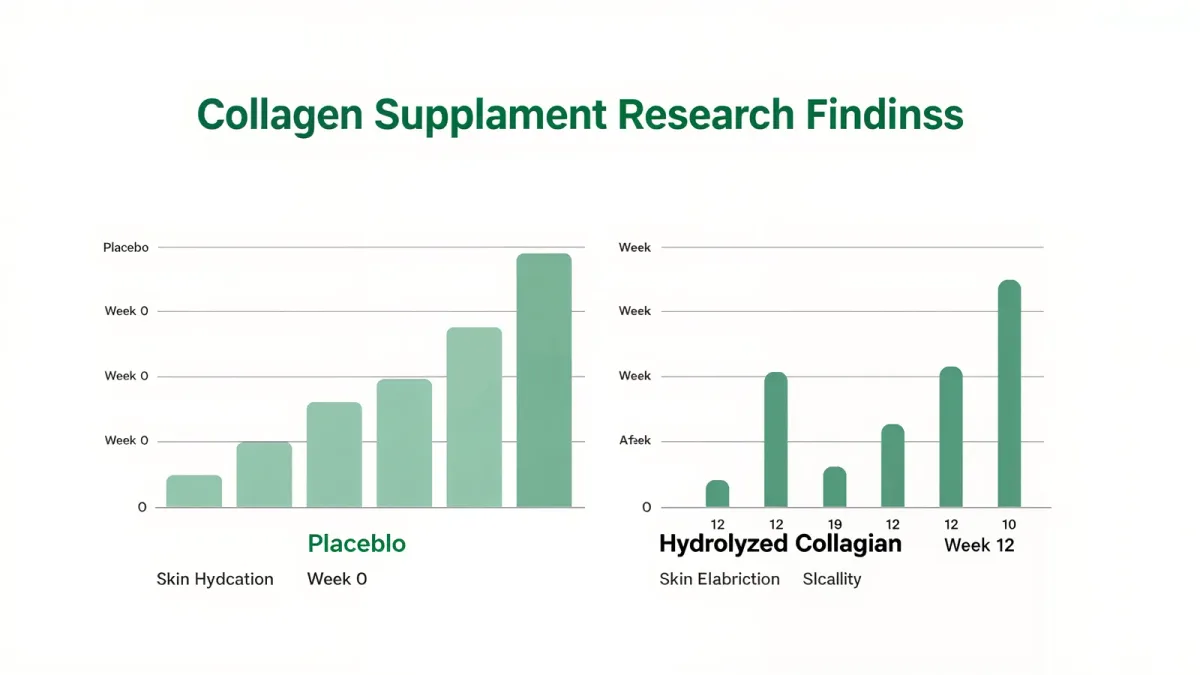
Collagen supplementation has two genuinely encouraging findings behind it and a large gap around them. In a 2008 trial by Clark and colleagues in physically active adults, gelatin with vitamin C was associated with reduced activity-related joint pain. In a 2017 trial by Shaw and colleagues published in the American Journal of Clinical Nutrition, 15 grams of vitamin C-enriched gelatin taken before exercise roughly doubled a blood marker of collagen synthesis in a small sample of healthy men. Both trials were small, short, and measured proxies — pain scores and biomarkers, not injury rates or structural repair.
24 News Click publishes information, not medical advice. Joint pain deserves a clinical evaluation before any supplement decision.
What is the mechanistic idea?
Tendons, ligaments and cartilage are mostly collagen, and they adapt slowly because their blood supply is sparse. The hypothesis behind collagen timing is simple: ingest collagen peptides plus vitamin C shortly before exercise, and the exercise-driven increase in tendon blood flow delivers the circulating amino-acid building blocks and the vitamin cofactor exactly where synthesis happens. It is a plausible transport argument, not proof of repair. The Shaw trial's biomarker, PINP — a byproduct measurable in blood when collagen is made — rising after intake is consistent with the mechanism; whether more marker means stronger tendons over months is untested.
What did the Clark 2008 trial find?
Clark and colleagues randomized roughly a hundred physically active adults with activity-related joint pain to gelatin with vitamin C, or control preparations, over about three months. Per the published results, the collagen group reported greater reduction in joint pain during activity and, in some measures, at rest. The trial's limits matter as much as its direction: pain is subjective, blinding is hard with functional foods, and the population was people with exercise-related achiness, not diagnosed joint disease. No imaging or structural endpoint was involved.
What did the Shaw 2017 trial find?
Shaw and colleagues tested 15 grams of vitamin C-enriched gelatin an hour before exercise in eight healthy men, in a crossover design with a synthetic-collagen comparator arm. Per the results published in the American Journal of Clinical Nutrition, the gelatin-with-exercise condition roughly doubled the collagen-synthesis marker PINP compared with control conditions. The design is the finding's ceiling: eight men, single sessions, blood markers. It is the best-cited support for pre-exercise collagen timing and, read honestly, it is a mechanistic demonstration, not a performance or injury outcome.
What about injury prevention and recovery?
Here the evidence is thinnest. No large, long-duration randomized trial has shown that collagen supplements reduce tendon or ligament injury rates in athletes. A handful of small studies in specific populations — for example, recreational athletes with ankle instability or post- Achilles-tendon-load designs — have reported modest functional improvements, but sample sizes are small, follow-up is weeks, and results have not been pooled into a decisive meta-analysis. Reviews of the field routinely conclude that collagen is promising and under-tested, which is a fair summary of where the literature stood as of 2025.
How does collagen compare with the better-tested options?
For joint symptoms, the comparative evidence favors other interventions first. Creatine monohydrate and specific strength training have larger and better-replicated evidence bases for their respective outcomes; progressive loading remains the cornerstone of tendon rehabilitation, with strong trial support behind structured programs. Collagen's appeal is convenience, not potency — and its trial literature, unlike creatine's, does not yet include large replicated trials in diverse populations.
Is collagen safe in the trials?
Across the published trials, collagen peptides and gelatin have been well tolerated, with gastrointestinal complaints the main reported side effect and no serious adverse events attributed to the supplement in these studies. Safety data at studied doses look benign; absence of harm signals in small trials is weak reassurance, but nothing in the record raises a flag. Anyone with kidney disease or on protein-restricted diets has a reason to discuss any concentrated protein supplement with a clinician first.
What a careful reader takes away
Three statements survive scrutiny. Collagen with vitamin C appears to raise collagen-synthesis markers when taken before loading exercise, in small trials. Activity-related joint pain improved modestly in one moderate-size trial. Nothing yet shows injury prevention, structural repair, or benefits at scale. Buyers meet marketing that skips the last sentence; the evidence does not.
Does the type of collagen matter?
Labels distinguish collagen peptides, gelatin and hydrolyzed collagen, and the distinction is smaller than marketing suggests. Gelatin is partially hydrolyzed collagen; peptides are further broken down. Both deliver the same amino-acid profile, dominated by glycine, proline and hydroxyproline, and both raise the same circulating markers in the trial literature — the Shaw 2017 study used vitamin C-enriched gelatin, not purified peptides. Type I and type II claims refer to which collagen the source tissue contained; after digestion the body receives peptides, not intact structural collagen, so the source-tissue argument is weaker than label copy implies. Undenatured type II collagen is a genuinely different preparation with its own small trial literature in joint comfort, and it should not be conflated with the peptide studies.
How much collagen did the trials use?
The trials cited here used specific amounts as studied facts, not recommendations. Shaw and colleagues tested 15 grams of vitamin C-enriched gelatin an hour before exercise. Clark and colleagues' joint-pain trial used a 10-gram gelatin-based supplement with vitamin C taken daily. Commercial doses range widely around these numbers, and no trial literature establishes that more is better — the dose-response curve for collagen synthesis markers at different intakes is simply not mapped.
What would settle the question?
The field's missing study is easy to describe: several hundred athletes, randomized to collagen peptides with vitamin C or placebo, followed for a season, with tendon injury incidence as the primary endpoint. Nothing of that scale existed as of 2025. Reviews of the literature consistently call for exactly this design, and its absence is the strongest statement available about the current evidence: promising mechanism, encouraging small trials, and no proof at the level that would justify confident claims. Until such a trial exists, collagen remains a reasonable object of study and an optional, low-risk consumer choice — with marketing that consistently runs ahead of what has been demonstrated.
Is collagen a good protein source generally?
As a protein, collagen is incomplete: it lacks tryptophan and is low in the branched-chain amino acids that drive muscle protein synthesis. Per NIH Office of Dietary Supplements background material on protein, collagen is not a substitute for complete proteins in supporting muscle maintenance. Whatever its joint-related merits, rating collagen as a general protein supplement measures it against a job it is structurally poor at — a distinction label marketing rarely makes.
FAQ
Does collagen help joint pain?
One moderate-size trial (Clark et al., 2008) in active adults with activity-related joint pain reported greater pain reduction with gelatin plus vitamin C over about three months. The finding is supportive but not definitive: subjective endpoints, limited blinding, no structural measures.
Should collagen be taken before exercise?
The timing idea comes from a small 2017 crossover trial in which pre-exercise gelatin roughly doubled a collagen-synthesis blood marker. It is a plausible mechanism, not a demonstrated benefit for tendons or performance.
Can collagen prevent tendon injuries?
No large randomized trial has shown injury prevention. Reviews as of 2025 describe the evidence as promising but preliminary, with small samples and short follow-up dominating the field.