The right way to choose a fitness tracker is to start with one goal — daily movement, sleep, running, or structured training — and buy the sensors that goal actually needs. Everything else on the spec sheet is noise. A tracker is a measurement tool, and a measurement tool is only useful when it measures the thing you care about.
Merriam-Webster defines choose as picking from a number of alternatives, and that is exactly the trap here. Tracker marketing presents dozens of alternatives at once: step counts, sleep scores, stress readings, recovery metrics, training-load estimates. Picking among all of them at once is how people end up paying for features they never open.
What goal should decide the purchase?
The goal should decide it, and the goal should be named before any browsing begins. Someone who wants a nudge to walk more needs a very different device from someone logging intervals twice a week. The first person needs a step counter that is comfortable enough to wear all day. The second needs a heart-rate sensor that responds quickly to changes in effort.
A useful exercise is to write down the one question the tracker should answer. "Am I moving enough on ordinary days?" points one way. "Is this training block loading me appropriately?" points another. "Am I sleeping enough to recover?" points to a third. Most disappointment with trackers comes from buying a device built to answer a question the buyer was never asking.
Which features matter for everyday activity?
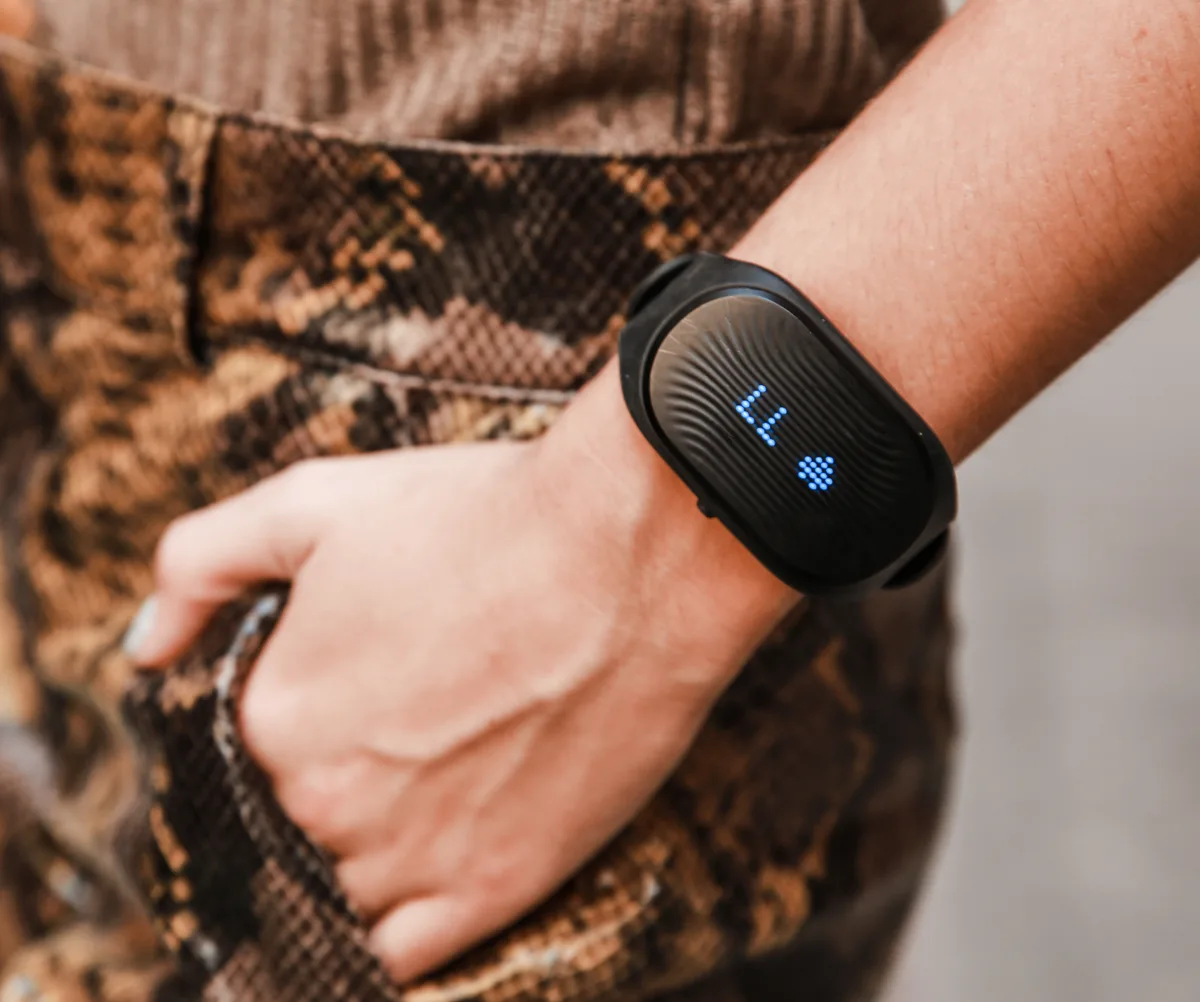
For everyday activity, the step count is the core feature, and comfort decides whether it gets used. A step counter works by detecting the rhythmic motion of walking, so wrist placement and all-day wearability matter more than screen size or app polish. If the band comes off by Wednesday, the data stops on Wednesday.
Battery life belongs on this list too. A device that needs charging every night cannot track sleep, which removes a whole category of data. For a general-activity buyer, a longer battery and a simple display usually beat a brighter screen and a shorter charge.
It is also worth knowing what a step count does not capture. Swimming, cycling, lifting, and pushing a stroller all register poorly or not at all. A reader whose activity is not walking should treat the step number as one signal among several, not the whole picture.
What should runners and endurance athletes look for?
Runners and endurance athletes should look first at heart-rate quality and GPS. Heart rate during hard efforts is where cheap optical sensors struggle: they tend to lag behind sudden changes in pace, which blurs the record of intervals. Wrist-based GPS accuracy varies between devices and can drift on tree-covered trails or between tall buildings.
For structured training, the more useful features are ones that summarize load over days and weeks rather than displaying a single session. A device that estimates training load — roughly, how much total stress workouts place on the body — can help a runner see when a block has stacked too much too fast. That kind of summary pairs naturally with concepts covered in pieces like Deload weeks: when do they help and why? and How progressive overload actually works.
One caution applies here. Manufacturer metrics such as recovery scores and readiness numbers are the manufacturer's own estimates, built from proprietary formulas. They are not independently verified measurements of physiology, and no tracker replaces how an athlete actually feels, moves, and performs.
Do sleep and recovery features hold up?
Sleep tracking is genuinely useful for spotting patterns, and much less reliable for measuring precise sleep stages. Wrist devices infer sleep from movement and heart-rate rhythms, so they do a reasonable job of estimating when sleep happened and roughly how long it lasted. Stage-level breakdowns — the deep versus light versus REM split — rest on weaker ground and should be read as rough estimates.
The practical value is trend-watching. A week of short nights before a hard training week is a pattern worth noticing, and it connects to the recovery side of training covered in the site's Recovery section. A single night's "sleep score" is far less meaningful than the same number would suggest, because scoring formulas differ between brands and are not standardized.
Anyone considering sleep data as part of a health decision should treat it as a conversation starter with a clinician, not a diagnosis. Consumer trackers are not medical devices in the diagnostic sense, even when they look clinical.
How accurate are fitness trackers, really?
Accuracy varies by metric, and the honest answer is that some numbers are sturdier than others. Step counts and heart rate at steady, moderate efforts are the more reliable end. Calorie burn estimates are the weak end: they are modeled from heart rate and body data, and the models carry wide error margins. Two devices on the same wrist can disagree noticeably on calories for the same workout.
The sensible reading is directional. A calorie estimate is useful for seeing whether one day was much bigger than another. It is not useful as an exact account of energy burned, and building eating decisions directly on top of it stacks one estimate on another. Readers weighing fueling around training will find the evidence-based framing in the site's Nutrition section a better foundation than any wrist display.
What this means: a practical way to decide
What this means in practice is a short checklist, applied in order. First, name the single goal. Second, list the two or three sensors that goal requires — steps and comfort for general activity, heart rate and GPS for running, overnight wear and battery life for sleep. Third, set a budget for those sensors and ignore features outside the list. Fourth, check the basics that keep data flowing: battery life, band comfort, and whether the app exports data if the reader ever switches brands.
A simple comparison of the main use cases:
| Goal | Features that matter most | Features to deprioritize |
|---|---|---|
| Daily movement | Step count, comfort, battery life | Advanced training metrics |
| Running and endurance | Heart-rate quality, GPS, session summaries | Smartwatch extras |
| Sleep and recovery | Overnight wear comfort, multi-day battery, trend views | Precise stage claims |
| Structured strength training | Manual logging, heart rate for conditioning work | Step-based metrics |
Strength-focused readers deserve a note: wrist wearables count little of what happens in a weight room. Barbell work does not register as steps, and optical heart rate jumps around under heavy lifting. For that population, a tracker's conditioning-work features matter more than its activity features, and the programming context lives in articles like How many weekly sets per muscle group does research support? This connects to our earlier piece, How many weekly sets per muscle group does research support?.
The evidence a buyer can gather personally is also worth using. Wear the tracker for a normal week before changing anything, and compare what it reports against what actually happened. If the step count on a known long walk looks absurd, or the heart rate spikes to impossible values mid-workout, that device has shown its limits on the reader's own wrist — which is the only place that matters.
The bottom line on picking a tracker
The bottom line is that a fitness tracker is a good servant of a clearly stated goal and a poor substitute for one. Devices differ most in the sensors that serve specific goals, least in the long feature lists that serve marketing. Buy for the question you actually want answered, treat manufacturer scores as estimates rather than facts, and let the trend lines — not any single day's numbers — carry the meaning. Readers building training around tracking will get the most from pairing the device with the programming principles covered across the site's Fitness section, and from keeping expectations matched to what the evidence supports.