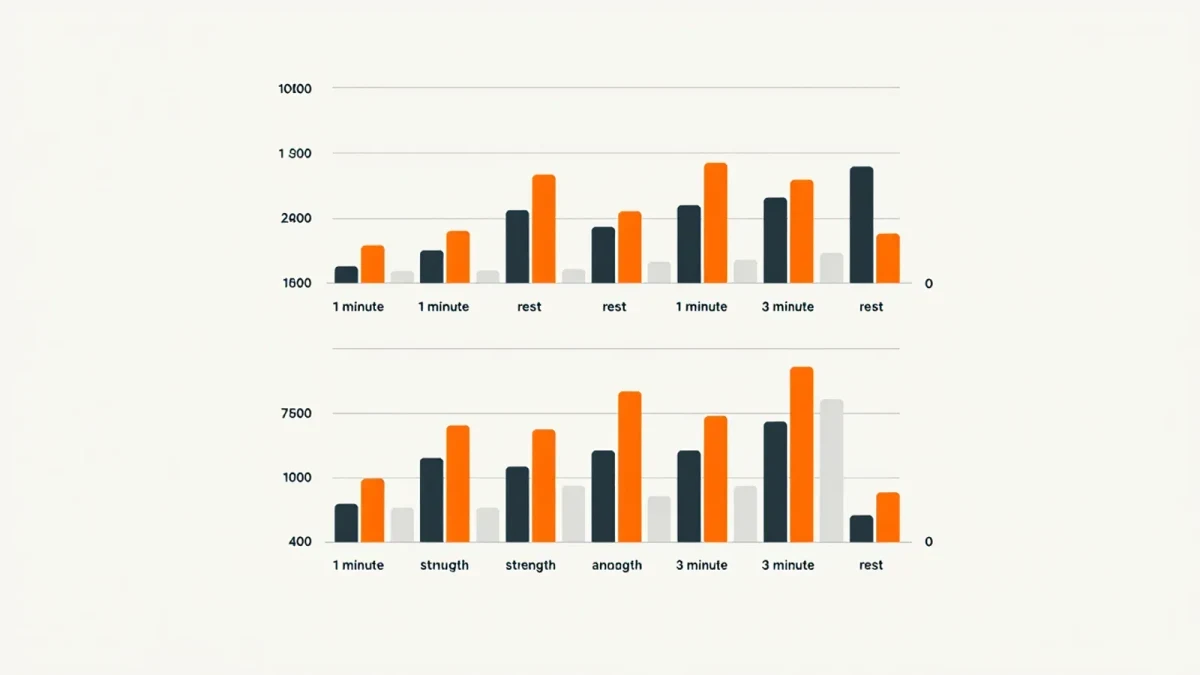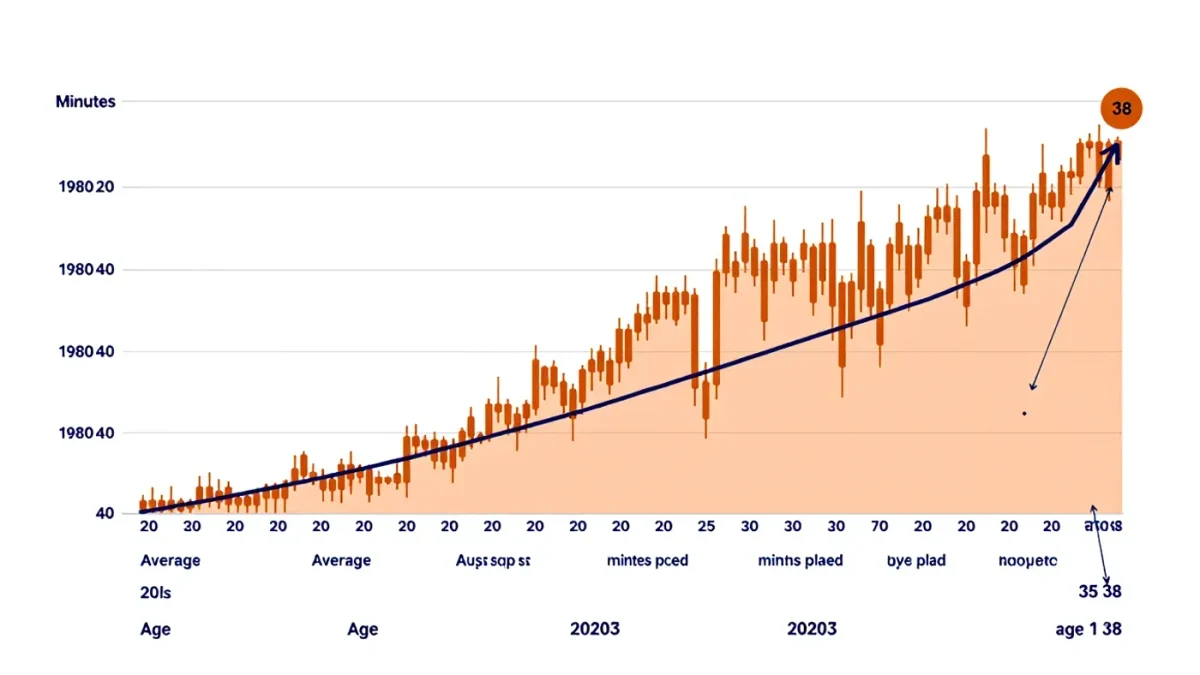
Longer rest intervals — roughly two to three minutes or more between sets — produced greater strength and muscle gains than one-minute rests in a 2016 controlled trial by Schoenfeld and colleagues in 21 resistance-trained men, and a 2018 meta-analysis by Grgic and colleagues found the same pattern for strength across the trial base. The mechanism appears mundane: longer rests let each set be performed with more repetitions at a given load, raising total training volume, the variable most strongly tied to growth.
24 News Click publishes information, not medical or training advice. Individual programming decisions belong with a qualified exercise professional and, where health conditions exist, a clinician.
Why would rest length change results at all?
Because short rests cut repetitions. A set planned at eight repetitions with one minute of rest before it will often yield five or six, where three minutes of rest would have yielded eight. The 2016 Schoenfeld trial, published in the Journal of Strength and Conditioning Research, randomized trained men to one-minute or three-minute rests for the same exercises and rep ranges over eight weeks; the three-minute group accumulated significantly more volume load and gained more strength and muscle thickness. The rest period was not magic — it bought work.
The physiological account is consistent with that arithmetic. Short rests leave the muscle and the nervous system less recovered, and later sets degrade first in repetition count, then in bar speed. Fatigue is not itself the growth stimulus; it is a constraint on how much stimulus a session can hold.
What did the meta-analyses find?
Grgic and colleagues' 2018 meta-analysis in Sports Medicine, covering controlled trials on rest interval length and muscular adaptations, concluded that longer rests of about two to three minutes or more produced greater strength gains than shorter rests of around one minute, with the hypertrophy evidence pointing the same direction. A later 2021 meta-analysis by Grgic and colleagues on rest and hypertrophy found no clear overall difference in muscle growth across rest lengths — a genuinely mixed result worth stating plainly.
How both findings fit: hypertrophy tracks total volume, so when short-rest programs are volume-matched to long-rest programs, growth can equalize. In free-living programs, where nobody adjusts for the reps lost to short rests, longer rests usually win by default. Strength outcomes favor longer rests more consistently, likely because heavy-set performance depends heavily on recovery between attempts.
Neither analysis found short rests harmful. The claim the evidence does not support is the old gym belief that short rests are superior for hypertrophy because they raise fatigue and metabolic stress.
Is there still a case for short rests?
Yes — time. A session of twenty sets with three-minute rests runs about twice as long as the same sets with one-minute rests. For lifters whose constraint is the clock, circuit-style or short-rest training preserves volume per hour even at some cost per set. Research on time-efficient training reviews acknowledges this trade-off without declaring a winner, because the right answer depends on which resource is scarce: recovery capacity or available time.
Short rests also raise perceived effort and cardiovascular strain. That can be a goal in conditioning contexts. For pure strength and size goals, the trial evidence favors longer rests unless time forces a compromise.
Do different exercises need different rests?
The trials do not cleanly separate exercises, but program design in the studies reflects a pattern: heavy compound movements — squats, presses, rows — are given the longest rests, and smaller single-joint movements shorter ones. The rationale is the same volume arithmetic: a set of curls loses fewer absolute reps to a short rest than a set of squats, and the total tonnage at stake is smaller.
No controlled trial demonstrates a distinct optimal rest for isolation work. The practical structure used in research protocols — roughly two to three minutes for compounds, one to two minutes for accessories — is a reasonable convention built on the volume logic the trials did establish, not a separately proven rule.
What about resting even longer than three minutes?
Three to five minutes appears for heavy strength work in some trials and reviews without clear evidence of further benefit beyond what volume explains. Very long rests make sessions long enough that volume per session can fall for scheduling reasons — the constraint flips from physiology to logistics. The evidence base contains no trial showing monotonic gains as rest stretches toward five minutes for hypertrophy.
The defensible summary: rests of two to three minutes are the best-supported default for growth and strength; one minute costs work; five minutes buys little that is demonstrated.
What should lifters actually do with their rest timing?
Structure rest around the goal of each exercise rather than a single session-wide number. In the research protocols that produced the strongest results, heavy compound work came first with the longest rests, accessory work followed with shorter rests, and rest length stayed fixed from week to week so progression reflected added load or reps, not shrinking pauses. Changing rest length between comparable sessions quietly changes the stimulus, because the reps recovered per set change with it.
A stopwatch or a gym clock makes the variable visible. Studies that controlled rest precisely did so with timers, and reviewers note that unmeasured rest tends to drift downward over a session as perceived urgency rises. Logging rest alongside weight and repetitions — the same logging discipline shown useful in progression research — keeps the week-to-week comparison honest.
Rest timing is also the easiest variable to adapt to circumstance. A crowded gym or a short lunch window changes what is practical; the evidence says the cost of short rests is lost repetitions, and the honest response is fewer counted hard sets, not a pretense that the session equaled a longer-rested one.
Rest intervals and outcomes, trial summary
| Rest length | Strength | Hypertrophy | Session cost |
|---|---|---|---|
| ~1 minute | Lower gains (Grgic 2018; Schoenfeld 2016) | Lower when volume is not matched | Shortest session |
| 2–3 minutes | Greater gains across trials | Greater in the 2016 trial; volume-matched parity in later meta-analysis | Moderate |
| 3–5+ minutes | Comparable to 2–3 min; little added evidence | No demonstrated extra benefit | Long session |
FAQ
How long should rest be between sets for muscle growth?
The best single trial evidence — Schoenfeld's 2016 study in 21 trained men — favored three minutes over one minute for both hypertrophy and strength, and Grgic's 2018 meta-analysis favored rests of about two to three minutes. When short-rest programs are volume-matched, later evidence shows growth can equalize.
Are short rests better because they feel harder?
No. The metabolic-stress hypothesis behind that belief did not hold up in the controlled trials: perceived effort rose with short rests while repetitions and volume fell. Fatigue constrained the stimulus rather than enhancing it.
Does rest length matter less for isolation exercises?
Probably, by arithmetic rather than direct proof: small-muscle sets lose fewer total repetitions to short rests. The convention of shorter rests for isolation work is consistent with the volume logic the trials established but was not separately tested.
Can a lifter rest too long between sets?
Session length, not physiology, sets the limit. Rests beyond three to five minutes show no added benefit in the trial base and push total workout duration to where scheduling, not recovery, reduces training volume.