Endurance athletes lose more iron than sedentary adults through foot-strike hemolysis, sweat, and gastrointestinal bleeding, and iron deficiency without anemia is common in runners, especially female runners. The National Institutes of Health Office of Dietary Supplements notes that iron deficiency is among the most common nutrient deficiencies worldwide, and sports-medicine reviews report depleted iron stores in a substantial share of distance runners. Interpretation and any treatment belong to a clinician, and this article offers neither.
24 News Click publishes information, not medical advice. Iron testing and supplementation decisions require a physician, since excess iron carries real harm.
Why do endurance athletes lose more iron?
Three mechanisms dominate the sports-medicine literature. Foot-strike hemolysis, the bursting of red blood cells in the capillaries of the feet with each stride, was documented in runners decades ago and is tracked by markers like haptoglobin. Sweat carries out a modest daily iron loss. And long hard efforts can cause gastrointestinal bleeding, visible or invisible, reported in a share of ultramarathon and marathon participants.
Female athletes add menstrual losses on top. Sports-nutrition reviews estimate total daily iron losses in heavy-training endurance athletes can approach or exceed typical intake, particularly in athletes who eat little red meat or no meat at all.
What is ferritin and why does it matter here?
Ferritin is the blood protein that reflects iron stores; serum ferritin is the standard first-line lab marker of iron status. Low ferritin with normal hemoglobin defines iron deficiency without anemia, a state that in athlete studies is associated with fatigue and, in some trials, reduced endurance capacity.
Athletes complicate the picture because ferritin rises with inflammation, and hard training causes temporary inflammation. A ferritin reading right after a race can look reassuringly normal while stores are actually low, which is one reason sports physicians often interpret labs alongside training context and sometimes repeat them.
Does low iron actually impair performance?
The clearest evidence concerns frank iron deficiency anemia, which clearly degrades endurance. For deficiency without anemia, the evidence is more mixed but leans toward a real effect in depleted athletes. A 2011 randomised trial by Hinton and colleagues in iron-depleted, non-anemic women found that iron supplementation improved endurance adaptation to training compared with placebo, consistent with earlier work by Brownlie and others showing improved time-to-fatigue with supplementation in that population.
Studies in athletes with normal iron stores show no benefit from extra iron — a null result worth stating plainly. The trials therefore support attention to status, not blanket supplementation.
What is the role of hepcidin?
Hepcidin, a liver hormone, is the body's master iron regulator: it blocks iron absorption from the gut and iron release from stores. Exercise raises hepcidin for hours afterward, driven by the inflammatory response to hard sessions, a finding established by Semple, Sim, and colleagues in the early 2010s.
This timing detail matters for planning: absorption of iron from food or supplements appears most effective when they are taken in the morning before or well-separated from heavy training, when the post-exercise hepcidin surge has passed. The hypothesis is supported by mechanistic studies, though full outcome trials on absorption timing remain few.
Who should be screened?
Sports-medicine bodies recommend screening for athletes at higher risk: female endurance athletes, athletes with recurrent fatigue or declining performance, vegetarians and vegans, athletes with heavy menstrual bleeding, and those returning from injury or altitude blocks. Screening means a blood panel read by a clinician, typically ferritin plus hemoglobin and related markers.
Screening everyone annually is not endorsed; the evidence supports targeting the groups above. Female athletes with menstrual dysfunction deserve particular attention, since heavy bleeding is a common and treatable cause of deficiency, as the Office of Dietary Supplements background on iron describes.
Can dietary changes fix low stores?
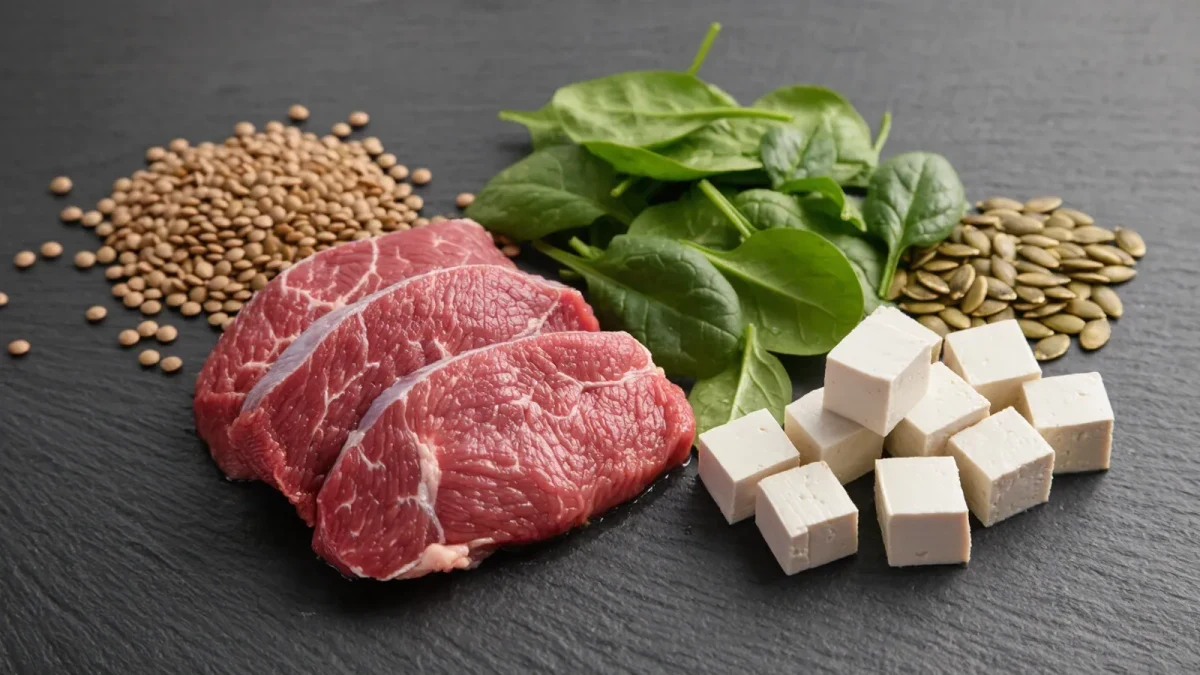
Sometimes, depending on the degree of depletion and the diet. Iron in food comes in two forms: heme iron from meat, absorbed at high rates, and non-heme iron from plants and fortified foods, absorbed at low rates that swing with meal context. Vitamin C markedly improves non-heme absorption; tea and coffee polyphenols and phytates in unsoaked grains and legumes reduce it.
For a vegetarian runner, the practical arithmetic means pairing plant iron with vitamin-C sources, spacing coffee away from iron-rich meals, and cooking legumes and grains in ways that reduce phytates. Where stores are genuinely depleted, dietary measures alone can take months, which is why clinicians sometimes prescribe iron — a medical decision, not a self-directed one.
Why is self-supplementation a bad idea?
Iron overload is dangerous, and a meaningful share of people carry genetic variants, such as hereditary hemochromatosis mutations, that make it worse. The Office of Dietary Supplements flags the tolerable upper intake level for iron at 45 milligrams per day for adults, and notes that iron supplements are a leading cause of fatal poisoning in young children. Unneeded iron also causes gastrointestinal side effects.
The evidence-aligned path is: test, interpret with a clinician, correct diet first where reasonable, supplement only on medical advice, and retest. That sequence is what sports-medicine reviews consistently recommend.
What does the evidence not show?
The evidence does not show that more iron helps athletes with normal stores, nor that ferritin targets for athletes should sit far above standard ranges — proposed athlete-specific cutoffs remain debated in the literature. It also does not show that routine IV iron belongs outside clinical settings, a topic examined mostly in small trials in diagnosed deficient athletes.
What about altitude training blocks?
Altitude adds a documented demand. At elevation, the body raises red-blood-cell production to compensate for thinner air, which pulls iron from stores. Reviews of altitude training report that athletes who arrive with low or even marginal iron stores mount a smaller red-cell response, and several expert groups recommend checking iron status before an altitude block — a medical decision about whether supplementation is warranted to support the altitude response.
The mechanism connects back to hepcidin. The hormone rises with inflammation, and hypoxic exposure adds its own regulatory signals, which is part of why sports physicians time any prescribed iron carefully around training at altitude. Endurance teams that keep athletes at elevation for weeks monitor blood markers through the block rather than assuming the pre-block picture holds.
For readers training at sea level, the altitude literature still carries one lesson: iron status is dynamic, and a single normal lab result does not guarantee adequate stores a season later. Athletes in the higher-risk groups described above are typically retested at intervals chosen with their physician.
FAQ
What ferritin level is considered low for runners?
Labs vary, and athlete-specific cutoffs are debated in the literature. Standard reference ranges flag deficiency at low ferritin values, while some sports-medicine papers argue depleted athletes may benefit from higher levels; a clinician should interpret the number alongside symptoms and training context.
Do vegetarians need iron supplements?
Not automatically. Plant-based eaters can maintain status with absorption-aware meal planning — pairing non-heme iron with vitamin C, limiting tea and coffee near meals — but female vegetarian endurance athletes are a high-risk group for screening per sports-medicine guidance.
Can running itself cause anemia?
Running raises iron losses through foot-strike hemolysis, sweat, and gastrointestinal bleeding, but true anemia usually reflects the balance of losses against intake. Persistent fatigue or declining performance warrants a blood panel read by a physician.