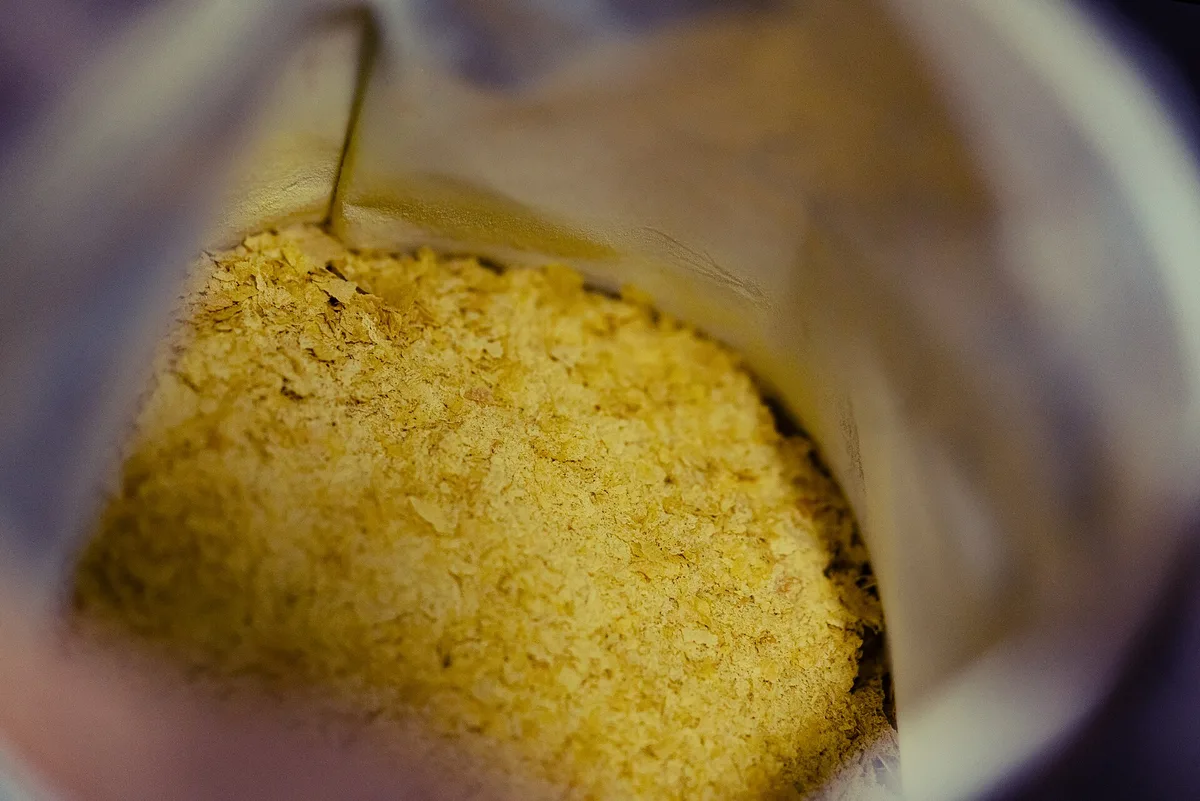
Nutritional yeast is a deactivated strain of yeast sold as dry flakes or powder. It tastes nutty and cheesy, which is why it shows up in vegan cooking as a stand-in for parmesan and cheese sauces. It is a seasoning first. It adds flavor, and it adds a modest amount of protein and B vitamins to whatever it is sprinkled on.
The honest weight of the evidence: this is a food, not a studied supplement. There are no large trials showing that nutritional yeast improves performance, recovery, or health outcomes. What nutrition science does establish is the broader frame. According to the Cleveland Clinic, the body needs six major classes of nutrients — macronutrients for energy, micronutrients such as vitamins and minerals, and water — and B vitamins help turn food into energy. Nutritional yeast can contribute to those classes. It cannot replace an overall balanced diet.
Anyone making personal decisions about diet, especially with a health condition, should work with a qualified clinician. For the wider context on how food supports the body, the site's nutrition section covers protein targets, carbohydrate periodization, and more.
What exactly is nutritional yeast?
Nutritional yeast is made from a yeast strain that is grown, then heated to deactivate it. Deactivation matters. Active yeasts, like the kind that leavens bread, are alive and produce gas. Inactive yeast cannot ferment. It is sold for its flavor and its nutrient content, not for any rising or bubbling function.
The product usually looks like yellow flakes, granules, or powder. Cooks stir it into sauces, dust it over popcorn and pasta, and blend it into cashew-based cheese substitutes. The characteristic umami, cheese-like taste is the main reason people buy it. As the Wikipedia entry on nutrition explains, fungi feed differently from plants and animals — they absorb nutrients by breaking down organic matter around them — which is a reminder that yeast sits in its own biological category, distinct from the plant and animal foods most diets are built around.
What does it actually contain?
Nutritional yeast is a source of protein and, in many commercial products, added B vitamins. The exact nutrient content varies by brand and by whether the product is fortified. Some versions are fortified with vitamins during manufacturing; others are not. That distinction matters for anyone tracking intake, and the label is the place to check.
One caution applies to all of it: label claims are the manufacturer's claims. This site does not verify them. A product page or jar that lists a vitamin content should be read as the maker's statement about the product, not as an independent measurement. Regulators treat these products as foods or dietary supplements, a category that is regulated differently from drugs and is not approved to treat any disease. We covered a connected angle in Vitamin D and immunity: what the trials actually show.
For perspective on where vitamins fit, the Cleveland Clinic's overview of nutrition and essential nutrients describes the B vitamins as a group that helps the body convert food into energy and supports the blood vessels, brain, immune system, and nervous system. That is the role fortified nutritional yeast is marketed against. It is a supporting role, not a headline one.
How do people actually use it?
The practical uses are culinary, and they are simple. A spoonful stirred into a white sauce or blended soup adds savory depth. Tossed with roasted vegetables or pasta, the flakes behave like grated hard cheese. In vegan kitchens, it is a standard component of cheese-style sauces made from blended nuts or potatoes.
For athletes and high-protein eaters, the more useful framing is the one the site's guide to protein targets for athletes lays out: total daily protein matters more than any single source. Nutritional yeast contributes some protein, but a sprinkle is a small amount relative to what training diets require. It earns its place on flavor, with the nutrients as a bonus.
Readers interested in plant-based protein planning more broadly may find the site's coverage of vegetarian athlete protein planning useful, since it looks at amino acid combinations and the evidence behind them. For related coverage, see Vegetarian athlete protein planning: leucine, combinations, and the evidence.
Does it live up to the health claims?
No good evidence supports strong health claims for nutritional yeast specifically. The claims circulating online — immunity boosts, energy surges, disease prevention — outrun the research. What exists is the general science of nutrients, not trials of this food. The World Health Organization's nutrition topic page frames the public-health picture at the population level: poor nutrition is linked to disease and mortality, and proven interventions center on overall dietary patterns, counseling, and food security rather than any single pantry item.
That is the pattern to hold onto. A food can be a reasonable part of a good diet without being a health intervention. The Cleveland Clinic notes that research supports proper nutrition in reducing risk for conditions such as diabetes, heart disease, and stroke — but that finding concerns diet as a whole, not nutritional yeast as a lever.
State what the evidence does not show as readily as what it does: no published trial demonstrates that nutritional yeast, on its own, improves health or performance outcomes.
What this means for your pantry
Our analysis: nutritional yeast is best understood as a flavorful, convenient seasoning that carries a modest nutrient payload. For vegan and vegetarian eaters, it adds variety and, if fortified, some B vitamins. For everyone else, it is a matter of taste. Nothing in the available evidence makes it necessary, and nothing makes it harmful for most people as a food.
Three practical points follow. First, check whether a product is fortified, and read the label as the manufacturer's claim. Second, treat dramatic health marketing with skepticism, because the research base for this specific food is thin. Third, anyone with a medical condition, a restricted diet, or questions about B-vitamin intake should raise them with a doctor or registered dietitian rather than a label. The evidence window for this article is the general nutrition science summarized by the sources cited above; no time-sensitive findings were used.