Sleep extension — deliberately spending more time asleep over several weeks — has improved sprint times, shooting accuracy and reaction speed in a handful of small controlled studies of university athletes. In the most cited trial, Stanford basketball players who extended their sleep for five to six weeks ran faster sprints and hit more free throws and three-point shots than at baseline. The catch: the evidence comes from a small number of trials, nearly all in young, healthy, well-trained people.
24 News Click publishes information, not medical advice. Persistent sleep problems, and decisions about training and health, belong with a qualified clinician or a sports-medicine professional.
What did the Stanford sleep extension study find?
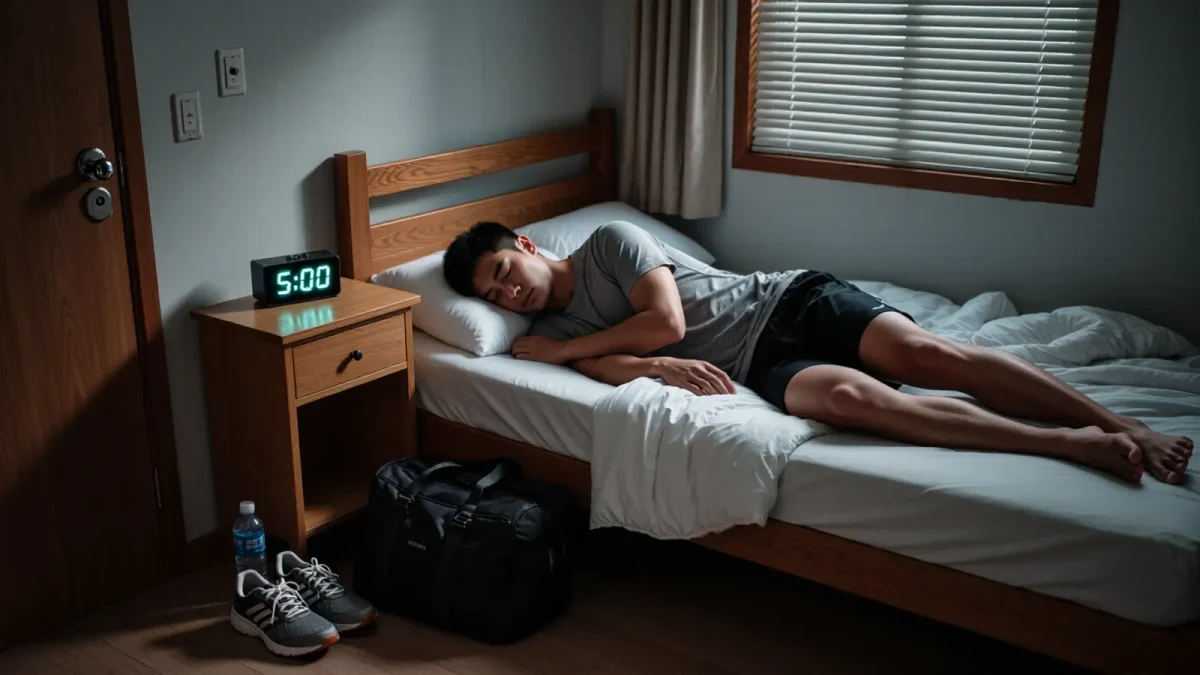
In a 2011 study by Cheri Mah and colleagues at Stanford University, eleven members of the men's basketball team kept their usual sleep-wake schedule for two to four weeks of baseline testing, then extended nightly sleep to a target of roughly ten hours in bed for five to six weeks. Basketball was chosen because the sport offers clean, repeatable performance measures.
During the extension phase, timed sprints over repeated court lengths got faster by around half a second, free-throw accuracy improved by about nine percent, and three-point accuracy improved by a similar margin compared with baseline. Athletes also rated practices and games more positively on subjective scales. The design was an observational case series rather than a randomized trial: no control group of players kept short sleep, so some improvement could reflect training progression, motivation, or expectation.
The study was published in the journal Sleep and remains the most cited single data point on sleep extension in team-sport athletes. Its sample of eleven men limits how far the numbers generalize — to women, to recreational athletes, or to other sports.
What do controlled trials in other sports show?
A smaller 2015 study by Joshua Schwartz and Olli Simon, published in Physiology and Behavior, tested sleep extension in collegiate tennis players using a crossover design, in which each athlete served as their own control. After roughly five weeks of extended sleep, valid serve accuracy rose by about a third compared with habitual sleep, alongside improvements in sprint drills. The crossover structure strengthens the causal reading, though the sample was again small — under a dozen players.
Studies in other populations point the same direction without matching those effect sizes. Controlled partial sleep deprivation research — restricting sleep to four or five hours per night — reliably worsens maximal and submaximal performance, reaction time, and accuracy tasks in laboratory settings. If acute restriction hurts performance reliably, a real extension benefit in chronically under-slept athletes is biologically plausible. Plausibility, however, is not proof of the size of the benefit.
How big is the evidence base overall?
Small. A 2021 systematic review by Roisin Doherty and colleagues in the European Journal of Sport Science located only a handful of sleep-extension intervention studies in athletes, with combined samples in the low dozens to low hundreds across all of them. The reviewers concluded that extension appeared to benefit accuracy-based and reactive tasks more consistently than raw endurance output, and they flagged absent control groups, no blinding, and short durations as the field's main limitations.
Broader consensus documents, including a 2019 review in the British Journal of Sports Medicine on athlete sleep, frame the practical takeaway differently from the headlines: the first priority is correcting chronic short sleep, not stacking extra hours on top of adequate sleep. No good evidence shows that sleeping well beyond individual need adds further performance.
What mechanisms are supposed to explain the gains?
Sleep sits at the center of several recovery processes. Growth hormone pulses concentrate in slow-wave sleep, supporting tissue repair. Glycogen storage, attention, reaction time and decision-making all degrade under experimentally restricted sleep. For accuracy sports, the cognitive route — better attention and motor coordination — is the most commonly proposed explanation for the extension gains, since shooting accuracy improved more in the Stanford data than measures tied to raw physiology.
None of the extension studies measured the underlying mechanisms directly. The mechanistic case is assembled from separate deprivation experiments — a reasonable but indirect chain of reasoning.
Does more sleep raise anabolic hormones?
The hormonal evidence is thinner than fitness media suggests. A frequently cited 2011 study by Eve Van Cauter's group at the University of Chicago, published in JAMA, found that one week of sleep restricted to five hours per night lowered daytime testosterone in young men by roughly ten to fifteen percent. Whether extending sleep above adequate amounts raises testosterone, muscle protein synthesis, or growth-hormone output further has not been demonstrated in controlled trials; claims that extra sleep supercharges anabolism are extrapolations, not findings.
For injury risk, large cross-sectional surveys of adolescent athletes — including a study of more than one hundred sixty high-school players by Luke and colleagues at the Children's Hospital of Wisconsin, published in the Journal of Pediatric Orthopaedics in 2014 — consistently associate fewer hours of sleep with higher injury rates. Surveys show association, not cause: athletes who sleep little may also train more heavily or look after their health differently.
Do naps or banking sleep work as well?
Naps are studied separately and are not interchangeable with extension. Brief daytime naps of roughly thirty minutes or less improve alertness and selected performance measures after short nights, according to small controlled trials summarized in sports-science reviews. A nap does not reproduce the architecture of a full night — the long cycles of slow-wave and REM sleep that dominate extended nights — so a napping strategy cannot be assumed to deliver extension-study results.
Sleep banking — loading extra sleep before a known short-sleep period, such as a competition travel block — has preliminary support for preserving reaction time, but the trials are few, small, and short. It is best treated as a promising idea rather than an established method.
How do researchers actually measure sleep in these studies?
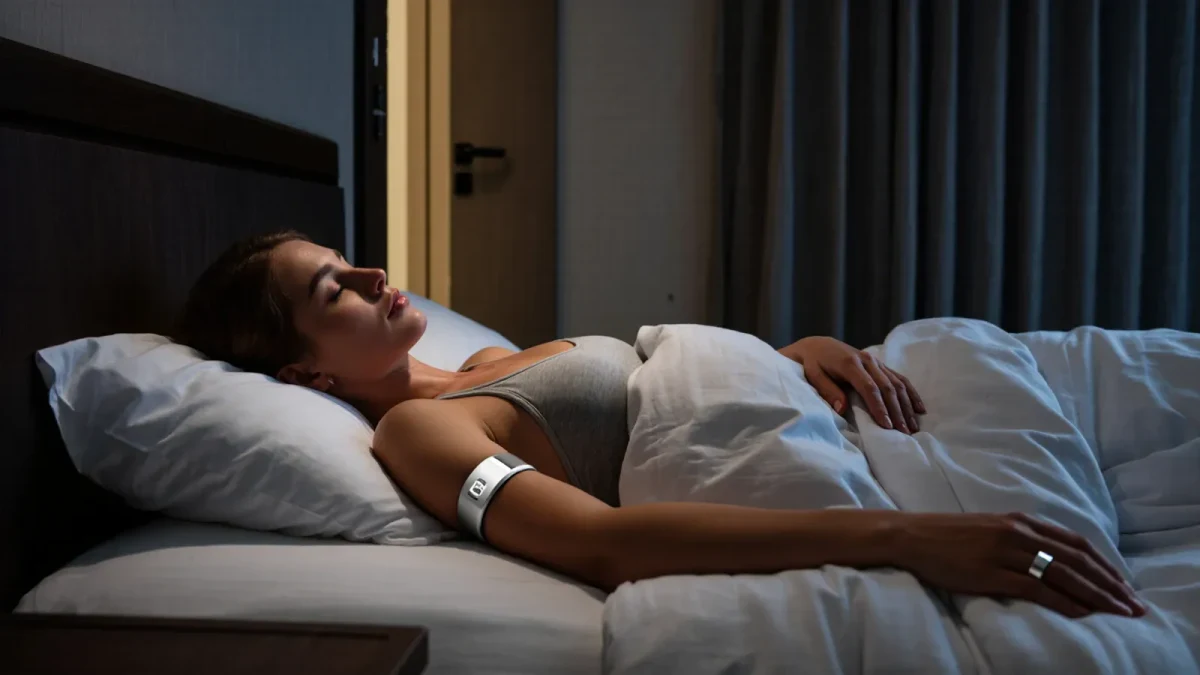
The measurement tools matter for reading the results. The Stanford and tennis studies relied primarily on sleep diaries and wrist actigraphy — movement-based monitors worn like watches — combined with structured performance testing. Actigraphy estimates sleep and wake from movement, and while it correlates reasonably with lab recordings in healthy sleepers, it can misclassify quiet wakefulness as sleep and typically overestimates total sleep time.
Polysomnography, the laboratory gold standard using brain-wave electrodes, has not been used in any of the athletic extension trials, because athletes cannot sleep in a wired-up lab for weeks while training normally. This means the extension figures in these studies — hours in bed, hours asleep — carry a margin of error, and reported targets of ten hours in bed likely correspond to somewhat less true sleep. Readers comparing their own wearable-device numbers to study targets should keep that measurement gap in mind.
What is the honest summary?
- Documented gains: faster timed sprints and around nine percent better shooting accuracy in one small Stanford case series (Mah et al., 2011).
- Stronger design: serve accuracy up by roughly a third after sleep extension in a small crossover trial in tennis players (Schwartz and Simon, 2015).
- Main gap: no large randomized controlled trial of sleep extension exists in any athletic population as of early 2026, and endurance benefits are inconsistently shown.
The pattern is consistent enough to take seriously: athletes who habitually sleep less than roughly seven hours, or who show signs of accumulated fatigue, appear to have room for measurable improvement from more sleep. The strongest documented gains were in skill accuracy and reactive tasks rather than raw power or endurance, and the magnitude in any individual is unpredictable. Sleep extension is one of the cheapest recovery interventions with a plausible, repeatedly positive — if small-study — evidence trail. Anyone with persistent sleep difficulties should raise them with a clinician rather than treating fatigue as a training variable to solve alone.