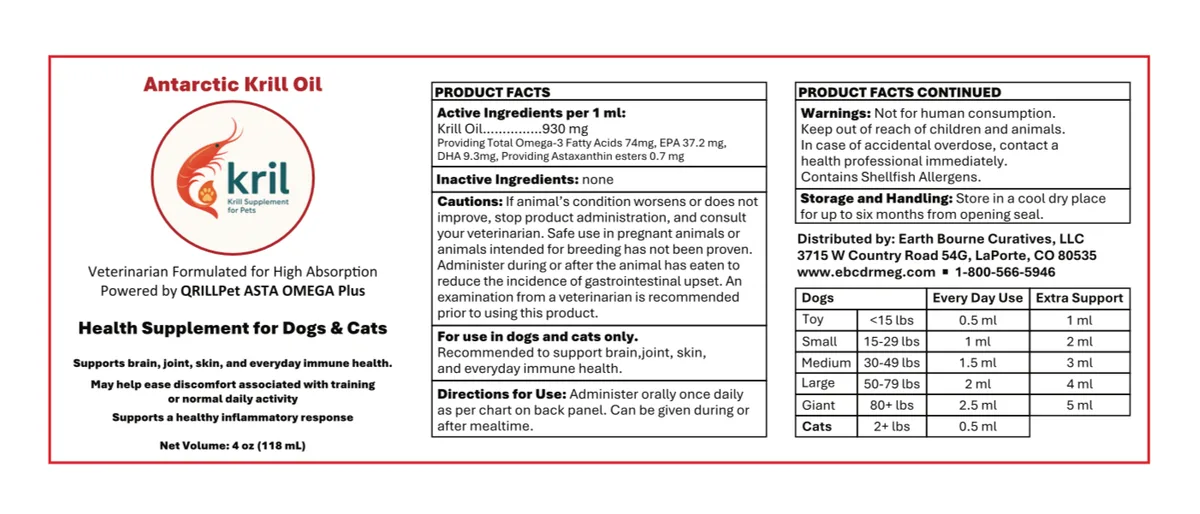
A proprietary blend lets a supplement label name every ingredient while disclosing only the blend's total weight. Per FDA labeling rules at 21 CFR 101.36, ingredients inside such a blend must be listed in descending order by weight, and the total must be declared — but the amount of each ingredient is a trade secret the format exists to protect. The result is a fully legal label that tells an athlete almost nothing about the dose of anything.
24 News Click publishes information, not medical advice. Evaluating a personal supplement regimen is a question for a qualified clinician.
Why do proprietary blends exist?
The rationale is commercial: a formula with disclosed milligram amounts can be copied by competitors. Blend language preserves that secrecy while satisfying a labeling law written to guarantee ingredient transparency, not dose transparency. The problem is that dose is where efficacy lives. Nearly every meaningful statement about a sports-nutrition ingredient is dose-dependent: beta-alanine is studied at multi-gram daily intakes over weeks, citrulline at specific pre-exercise gram ranges, creatine monohydrate at a well-documented daily amount. A blend can legally contain a dusting of each — an amount with no plausibility of matching the trial literature — while the label implies a complete formula.
What can a reader actually infer from a blend list?
Less than the format suggests. The weight order gives one weak signal: the first ingredient is the largest fraction of the total. If a stimulant blend totals 300 mg and caffeine is listed first, caffeine is at most 300 mg and probably less. If caffeine is listed last, the dose is small — but everything between the extremes stays unknown. Ingredient order also shifts between production runs without any obvious change to the label's appearance.
The one hard inference is arithmetic. Any single ingredient inside a blend cannot exceed the blend's declared total. That ceiling occasionally does real analytic work — for example, showing that a labeled dose cannot possibly match the doses used in research — but it never establishes that an effective dose is present.
What did the DMBA case show about blends?
Blend language has also concealed ingredients that were never declared at all. In 2014, Pieter Cohen and colleagues published an analysis in Drug Testing and Analysis identifying DMBA — a synthetic stimulant with no history in the food supply — in pre-workout and weight-loss supplements, hidden inside proprietary blend language rather than named on the label. Per the authors, DMBA had never been tested in humans. The episode showed that the blend format does not merely obscure doses; it can accompany outright undeclared ingredients, and independent laboratory analysis was the only mechanism that caught it.
How do blends interact with the evidence base?
The core conflict is between how research works and how blends are labeled. A study tests a specific dose of a specific ingredient in a specific population for a specific duration. A blend discloses none of the dose. When a blend-carrying product cites studies on its website, the cited evidence almost never tested the product's actual composition — a gap the label format makes invisible. Careful evidence summaries, such as the NIH Office of Dietary Supplements fact sheets, describe effects at studied doses, not at whatever dose a blend happens to contain. Reading those summaries against a fully disclosed label is straightforward; against a blend, it is guesswork.
Are there legitimate uses of the format?
In fairness, blend language is not proof of deception. Small brands and large ones use it for the same competitive reason, and some blended products are third-party certified, which verifies contents against the label per batch. The certification, however, verifies what the label claims — which, for a blend, still omits individual doses. A certified proprietary blend is a verified secret.
The practical hierarchy for a reader is short. Fully disclosed labels, with exact amounts per ingredient, allow comparison against research. Batch-certified products add contaminant and banned-substance screening. Blends without either offer marketing and a weight order — and the burden of proof sits with the product, not the buyer.
What would change the situation?
Nothing in current US law requires dose disclosure within blends, and no pending requirement does. Other categories solved this differently: the Nutrition Facts panel for conventional foods mandates per-nutrient amounts. The supplement blend exception persists because it was written into the 1990s framework and has survived unchanged. Until it changes, the only consumer-side tools are disclosure labels, certification databases and the small discipline of treating any dose that is not printed as a dose that may not exist.
How can a reader test a blend against the evidence?
A worked example shows the method. Suppose a pre-workout lists a pump blend totaling 6 grams, with citrulline first and beta-alanine second. The ceiling logic gives two facts: citrulline is at most 6 grams, and beta-alanine is at most whatever remains after citrulline — necessarily under 3 grams, since it trails citrulline in weight order. The trial literature for beta-alanine, per the Ong 2025 dosing meta-analysis, concerns total intakes accumulated over weeks at daily multi-gram amounts. Whether this blend delivers anything close is unknowable, and the honest conclusion is exactly that — unknowable, not optimistic. The same exercise on a fully disclosed label takes thirty seconds and returns an answer.
Do other countries handle blends differently?
Partially. Some jurisdictions require quantitative disclosure more aggressively than the United States; Canada's labeling regime, for example, requires doses for certain added ingredients such as caffeine above thresholds, per Health Canada's supplement labeling rules. Products sold in multiple markets sometimes print different labels for different countries — a fully disclosed label in one market and a blend in another — which itself tells a consumer what the manufacturer believes the format conceals. A practical trick used by careful shoppers is to check whether a brand's export or Canadian label discloses doses that its US label hides.
Does the blend format affect research interpretation?
It also distorts how studies are read. When a blend product is tested as a whole in a trial, the result applies to the exact formula tested — but formulas change without notice, because nothing in the blend format requires the maker to keep doses constant. A 2019 study of a pre-workout blend demonstrates the problem in principle: the finding attaches to a batch that can no longer be verified against what is on sale later, since the label never fixed the doses in the first place. This is why evidence-minded reviewers treat studies of undisclosed formulas as weak evidence regardless of the results, and why single-ingredient research remains the backbone of the field.
FAQ
Are proprietary blends illegal?
No. The format is explicitly permitted under FDA labeling rules at 21 CFR 101.36, which require ingredient names in descending weight order and the blend's total weight. Individual amounts are lawfully undisclosed.
Can a proprietary blend hide banned substances?
Blend language does not legally permit undeclared ingredients, but it has coincided with them. The 2014 DMBA analysis found a synthetic stimulant in products whose labels did not name it. Per-batch third-party screening is the main check against this.
Do any brands disclose full doses instead?
Yes. Many brands publish exact milligram amounts for every ingredient, and such labels can be checked against the doses used in published research — something a proprietary blend does not allow.