Carbohydrate periodization is the practice of scaling daily carbohydrate intake up and down with the demands of each training session, instead of eating the same amount every day. The reference points most sports dietitians use come from the joint position stand of the Academy of Nutrition and Dietetics, Dietitians of Canada, and the American College of Sports Medicine, which sets intake from about 3 grams per kilogram of body weight on rest days up to 12 grams per kilogram for extreme training blocks.
24 News Click publishes information, not medical advice. Individual nutrition planning for training and racing belongs with a qualified sports dietitian or clinician, and none of what follows is a prescription.
What is carbohydrate periodization?
Carbohydrate periodization means aligning carbohydrate availability with the work required on a given day. On hard interval days or long sessions, intake is raised so glycogen — the stored carbohydrate in muscle and liver that fuels high-intensity effort — is full at the start. On easy or rest days, intake is lowered, because a light session does not deplete glycogen to a degree that matters for the next workout.
The concept grew out of sports nutrition research from the 1960s onward showing that endurance performance tracks closely with glycogen stores. Scandinavian muscle-biopsy studies in the late 1960s demonstrated that low-carbohydrate diets drain glycogen and shorten time to exhaustion, while carbohydrate-rich diets refill it. Periodization is simply the day-to-day application of that finding.
How many grams per kilogram does the evidence support?
The most widely cited numbers come from the 2016 joint position stand of the Academy of Nutrition and Dietetics, Dietitians of Canada, and the American College of Sports Medicine. It describes ranges rather than single targets: roughly 3 to 5 grams per kilogram per day for short or low-intensity sessions, 5 to 7 grams for moderate training of about an hour a day, 6 to 10 grams for endurance programs of one to three hours, and 8 to 12 grams for extreme commitments above four to five hours, such as cycle tours.
These are starting points, not prescriptions. Body size, session type, sex, and concurrent strength work all shift where an individual lands inside a range, which is why the position stand frames them as bands to be tested and adjusted rather than fixed numbers.
Does training with low carbohydrate actually help?
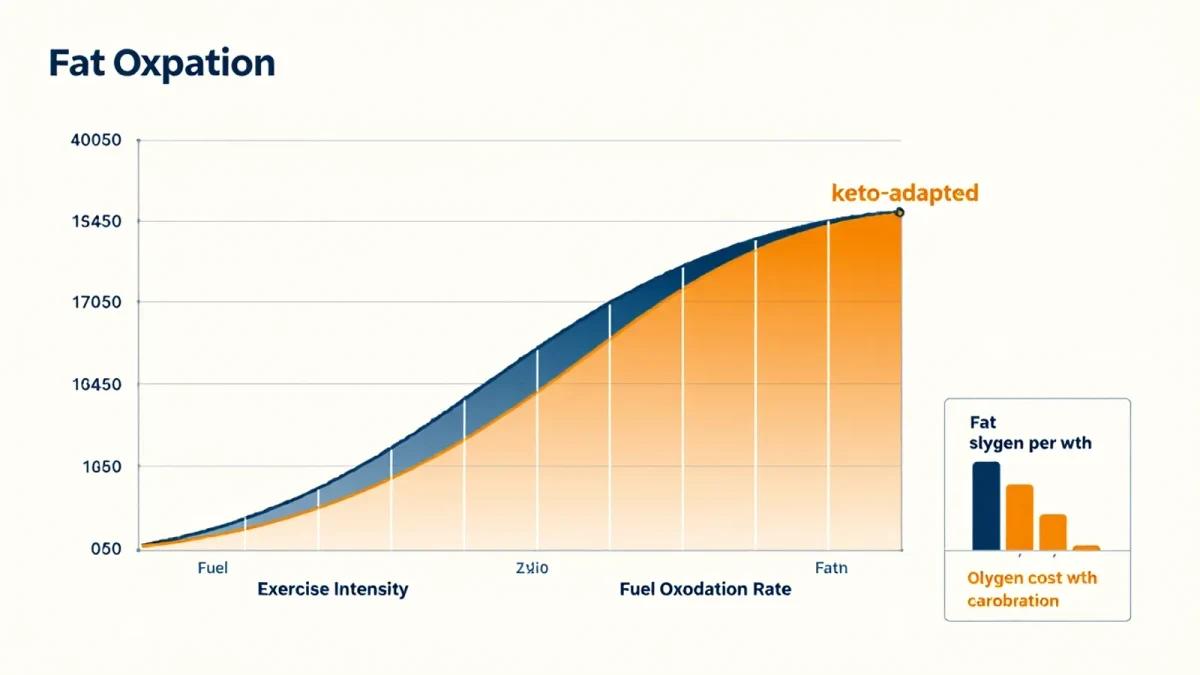
Training with deliberately low carbohydrate availability — often called train-low — increases the body's reliance on fat as fuel and amplifies some training signals in muscle, but the evidence that it improves race performance is mixed. That is the honest summary of roughly fifteen years of research.
Studies of sleep-low protocols, in which athletes do a hard evening session, restrict carbohydrate overnight, and complete a long easy session the next morning, show improved markers like fat oxidation and in some trials cycling efficiency. A notable 2016 trial in trained triathletes by Marquet and colleagues reported efficiency gains. But several later studies, including work in cyclists at the Australian Institute of Sport, found no clear performance advantage over matched athletes who trained with normal fueling, and some train-low studies show impaired quality of the hard sessions themselves.
What does fuel for the work required mean?
Fuel for the work required is a newer framing proposed in 2018 by researchers including James Morton of Liverpool John Moores University. Instead of blanket high or low carbohydrate days, athletes fuel up before and during the sessions where performance matters, and let carbohydrate fall on recovery or easy days, targeting glycogen to the purpose of each workout.
In practice this looks like a full carbohydrate breakfast before a hard interval set and a modest dinner before an easy morning jog. A 2018 study by Impey and colleagues found this day-to-day matching preserved training quality while still exposing muscles to some low-glycogen stress on easy days. Performance outcomes remain limited to small trials in trained cyclists and runners, so the approach is best described as promising rather than proven.
Does periodization beat eating high carbohydrate every day?
There is no large trial showing that a periodized pattern decisively outperforms a consistently high-carbohydrate intake for performance in trained endurance athletes. Periodization's clearest advantage is practical: it lets total intake fall on easy days without chronic underfueling, which can be easier to sustain and gentler on digestion than constantly forcing food.
For athletes with very high training loads, the consistent-high approach can require 8 to 12 grams per kilogram every day, an amount many find difficult to eat. Periodizing allows the average to track the actual weekly load. Head-to-head comparisons, however, are small and short, typically a few weeks with a handful of cyclists, so confident claims of superiority are not supported.
What are the risks of going low too often?
Repeatedly training with low carbohydrate raises the risk of low energy availability, the state in which food intake does not cover the energy cost of training plus basic body functions. The International Olympic Committee's 2018 consensus statement on relative energy deficiency in sport links chronic low energy availability to hormone disruption, poorer bone health, illness, and impaired performance.
There is also a training-quality cost. Sessions designed to be hard are usually worse without carbohydrate, and reviews of train-low research note that the practice can blunt the very adaptations the hard sessions were meant to produce. Most sports dietitians who work with the research recommend that only a minority of easy sessions be done low, and that key sessions be fueled.
How do athletes actually put this into practice?
In published applications, athletes classify each upcoming session by its carbohydrate need, plan meals the day before and the morning of accordingly, and adjust based on hunger, session quality, and recovery. A long-run day might carry 7 to 10 grams per kilogram across rice, bread, fruit, and juice, while a rest day might sit near 3 to 4 grams with protein and vegetables unchanged.
The National Institutes of Health Office of Dietary Supplements notes in its professional fact sheet on exercise and athletic performance that carbohydrate needs scale with training volume, and that food sources should come first. Its consumer fact sheet makes the same point in plainer language for the general reader.
What does the evidence not show?
The evidence does not show that one periodization scheme suits everyone. Studies differ in protocol, population, and duration, and elite-field data are thin. It also does not show that train-low strategies are necessary for recreational athletes, whose limiting factors are more often total training volume and baseline fueling than marginal fuel-timing tricks.
What the evidence does support is narrower: carbohydrate requirements move with training load, the published ranges are wide, and deliberate underfueling carries documented health risks. Anything more specific is individual experimentation, ideally with a sports dietitian.
FAQ
Is carbohydrate periodization the same as a low-carb diet?
No. Periodization keeps carbohydrate high when it matters and lower when it does not, while a low-carb diet restricts it throughout. The joint position stand of the Academy of Nutrition and Dietetics and the American College of Sports Medicine endorses ranges up to 12 grams per kilogram for extreme training, which is the opposite of a low-carb pattern.
Can recreational runners use carbohydrate periodization?
Yes, in a simple form. Matching bigger breakfasts to harder sessions and lighter eating to rest days is periodization in practice. The elaborate train-low protocols studied in trained athletes are not necessary for recreational goals, and underfueling carries the health risks described above.
How quickly does the body adapt to different carbohydrate days?
Glycogen responds within about 24 hours of a high-carbohydrate day, which is why one-day manipulation works. Fat metabolism adaptations from train-low sessions take weeks of repetition, and the small trials showing them lasted several weeks at most, with mixed performance results.