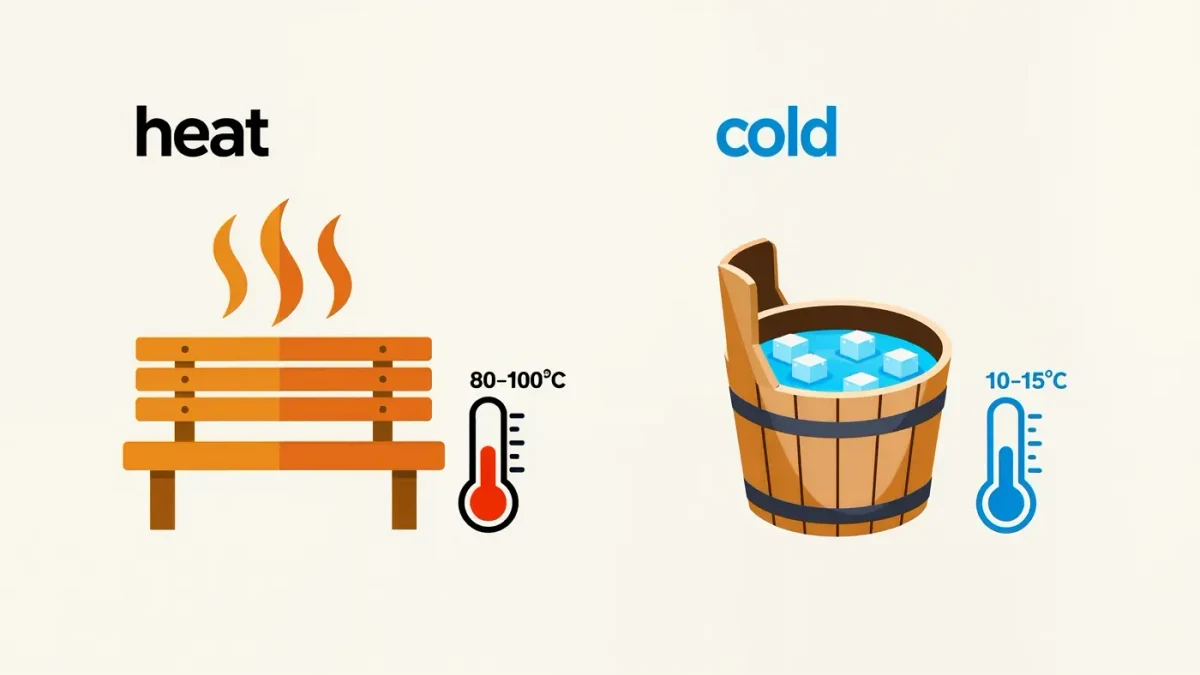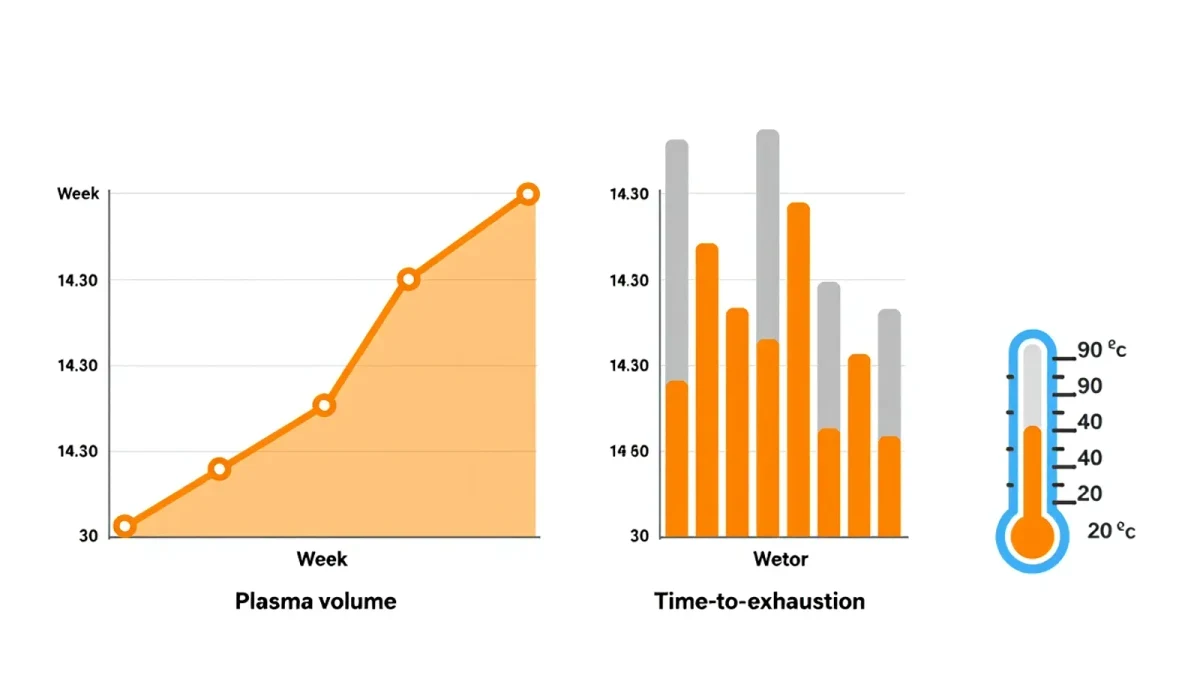
Post-exercise heat exposure — sitting in a sauna of roughly 80 to 90 degrees Celsius after training — improved running time to exhaustion by about a third and expanded plasma volume in a small but widely cited three-week New Zealand trial. A separate line of controlled work using hot water immersion after exercise in the heat improved five-kilometer performance in hot conditions by a few percent. The effects come from heat adaptation, not from heat being a general recovery tonic, and the evidence base remains small.
24 News Click publishes information, not medical advice. Heat exposure carries real cardiovascular risks; decisions about sauna use belong with a qualified clinician, especially for anyone with heart conditions, low blood pressure or pregnancy.
What did the landmark sauna study find?
In a study published in Biology of Sport in 2007, Glen Scoon and colleagues at Massey University had six male distance runners sit in a humid 89-degree sauna for about thirty minutes immediately after each training session, three times a week for three weeks, with matched runners serving as controls. All runners continued their normal training.
Over the three weeks, the sauna group's run time to exhaustion rose by about 32 percent while controls barely changed. The physiological signature was classic heat acclimation: plasma volume expanded by around seven percent, and red cell count trended upward by a few percent. Six participants is a very small sample — one of the reasons the striking result has never been replicated at scale — but the study was controlled and its physiological effects align with a large acclimation literature from occupational and military heat research.
Why would heat increase endurance?
The mechanism story is plasma volume. Repeated heat exposure stresses the body's cooling system; in response, the body expands blood plasma — the fluid component of blood — within days to weeks. A larger plasma volume improves thermoregulation and supports cardiac output during exercise, particularly in the heat. This is the same adaptation that occurs naturally over the first weeks of summer or hot-weather training camps, documented across decades of heat-physiology research.
Some researchers also propose that heat exposure stresses cells in ways that overlap with exercise signaling — heat shock proteins, which help protect and repair proteins, rise with both. Whether that overlap translates into meaningful training gains in humans remains an open research question, and no controlled trial has demonstrated it.
What did the hot water immersion trials show?
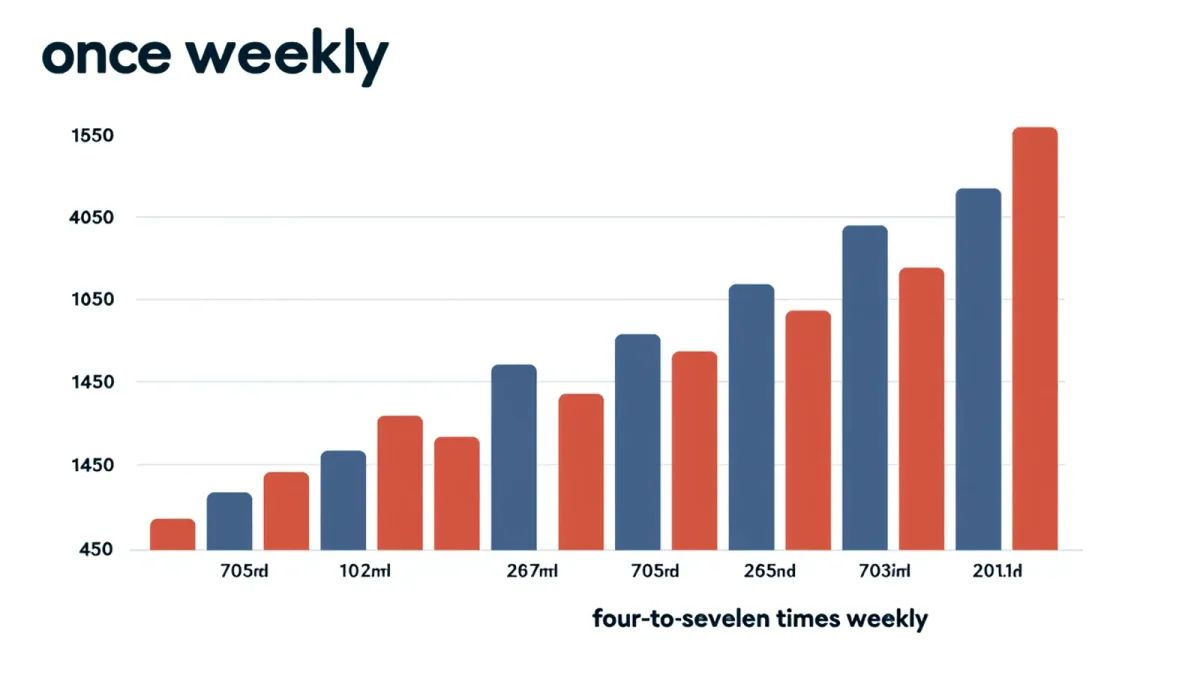
A second evidence line used soaking rather than sauna. In a trial by Zurawlew and colleagues at Coventry University, published in the Journal of Applied Physiology in 2018, recreational exercisers sat in about 40-degree water for forty minutes after each exercise session, six days a week for three weeks — an intentionally demanding protocol. Tested afterward in hot conditions, the immersion group ran a five-kilometer time trial about five percent faster than before, and showed lowered core temperature and heart rate responses, while a temperate-conditions group showed no clear performance change.
The pattern matters: heat adaptation improved performance specifically when tested in the heat. Claims that sauna use reliably improves performance in cool conditions are not supported by these trials.
Does the sauna help recovery in the ordinary sense?
For soreness and next-day readiness, the evidence is thin and mixed. Reviews of recovery techniques — including the Dupuy and colleagues 2018 meta-analysis in Frontiers in Physiology — group sauna and heat exposure with techniques showing inconsistent effects on soreness and damage markers, in contrast to the more consistent records of massage, compression and cold water immersion. Some small studies find subjective relaxation benefits; heat's documented strength is adaptation, not repair.
There is also a timing conflict worth naming: the growing cold-after-lifting evidence — a 12-week Journal of Physiology trial by Roberts and colleagues in 2015 showed blunted strength and muscle gains with regular post-exercise cooling — raises the mirror-image question of whether heat might preserve or even support adaptation. That hypothesis is biologically discussed but untested in controlled human trials as of early 2026.
| Claimed sauna benefit | Evidence verdict | Key study |
|---|---|---|
| Endurance in the heat | Supported, small trials | Scoon et al. 2007; Zurawlew et al. 2018 |
| Plasma volume expansion | Well documented | Scoon et al. 2007; acclimation literature |
| Endurance in cool conditions | Not demonstrated | Zurawlew et al. 2018 (null in temperate test) |
| Soreness and repair | Inconsistent | Dupuy et al. meta-analysis, 2018 |
| Long-term health outcomes | Observational only | Finnish cohort studies |
How long does heat adaptation last?
Adaptation fades without reinforcement. Heat-physiology research shows the plasma-volume component of acclimation decays within roughly one to two weeks without further heat exposure, while sweating adaptations persist somewhat longer. Athletes using post-exercise heat to prepare for a hot-weather event time the block accordingly — the studied protocols ran about three weeks, ending close to the target date. Maintaining adaptation through an entire season would require ongoing exposure, which no training study has evaluated for outcomes.
What about the Finnish health studies?
Frequently quoted alongside sauna research are large Finnish observational cohorts linking frequent sauna bathing with lower cardiovascular and all-cause mortality — including a study of more than two thousand middle-aged men published in JAMA Internal Medicine in 2015 by Laukkanen and colleagues. The finding is real but observational: men who sauna often may differ in many health-relevant ways, and the study cannot isolate cause. It is background context for habitual sauna use, not sports-recovery evidence, and it studied traditional Finnish sauna habits in a specific population.
Comparisons between heat and altitude training appear regularly in sports media, since both manipulate blood volume. The parallel has a physiological basis — both expand plasma volume early on — but the evidence weights differ sharply: altitude training carries decades of controlled performance studies, while post-exercise heat carries one small sauna trial and a handful of immersion studies. Treating the two as interchangeable tools overstates the heat literature considerably.
What are the risks?
Sauna exposure raises heart rate and drops blood pressure through vasodilation; dizziness and fainting are the common adverse events in sauna safety literature. Standard guidance — published by health institutions including Mayo Clinic in patient-facing materials — advises against alcohol combined with sauna, hydrating around sessions, and medical screening for cardiovascular disease, unstable blood pressure or pregnancy before regular use. Post-exercise sauna adds a dehydrated state to an already stressed circulation, which argues for the same caution after hard sessions, particularly in summer training blocks. No sports-science evidence overrides these standard cautions.
A cost-benefit note closes the comparison: unlike recovery purchases, sauna access is common and cheap — many gyms include one — so the barrier to testing personal response is low. That accessibility cuts both ways; easy use can slide into daily exposure that no study has evaluated for training outcomes, and the small-trial base means personal tolerance, hydration and blood-pressure response deserve attention each session.
Practical reading of the evidence
Post-exercise heat is best understood as an adaptation tool with a specific use case: preparing for competition in the heat, or extending the summer acclimation effect on a schedule. The performance evidence exists but is small — one strong sauna trial of six runners, one immersion trial in recreational exercisers — and it points specifically at hot-condition performance. As a soreness or repair intervention, heat trails massage, compression and even cold water on the pooled evidence. Anyone considering regular sauna use with any cardiovascular or blood-pressure condition should clear it with a clinician first.