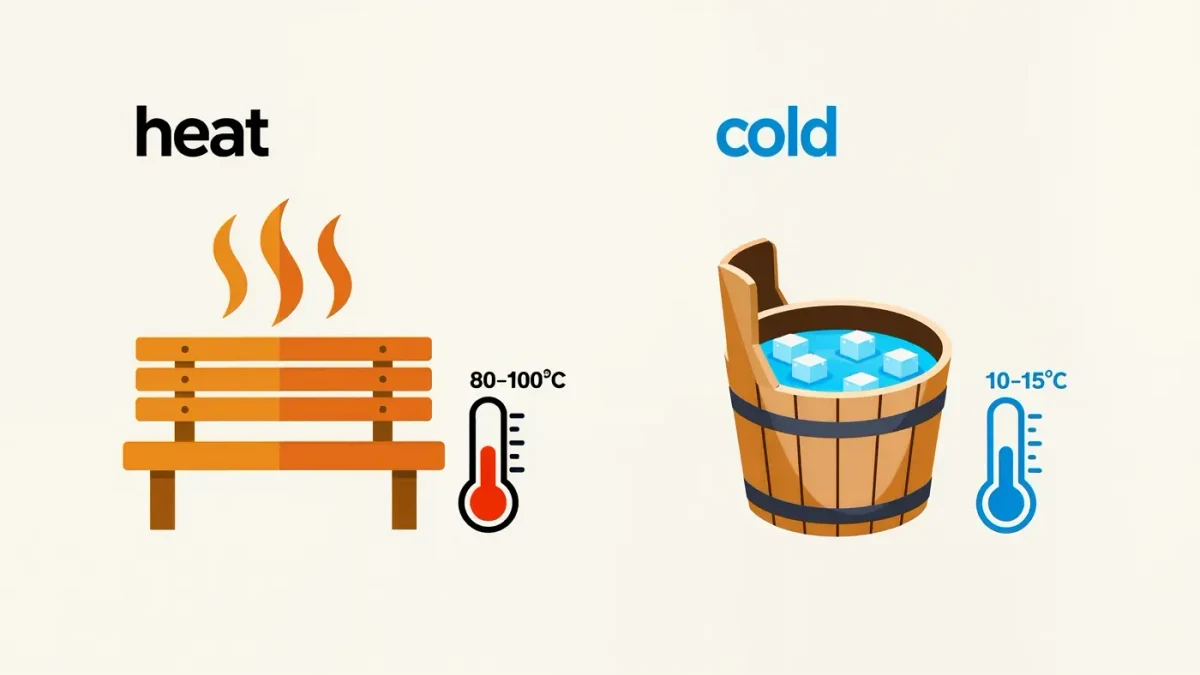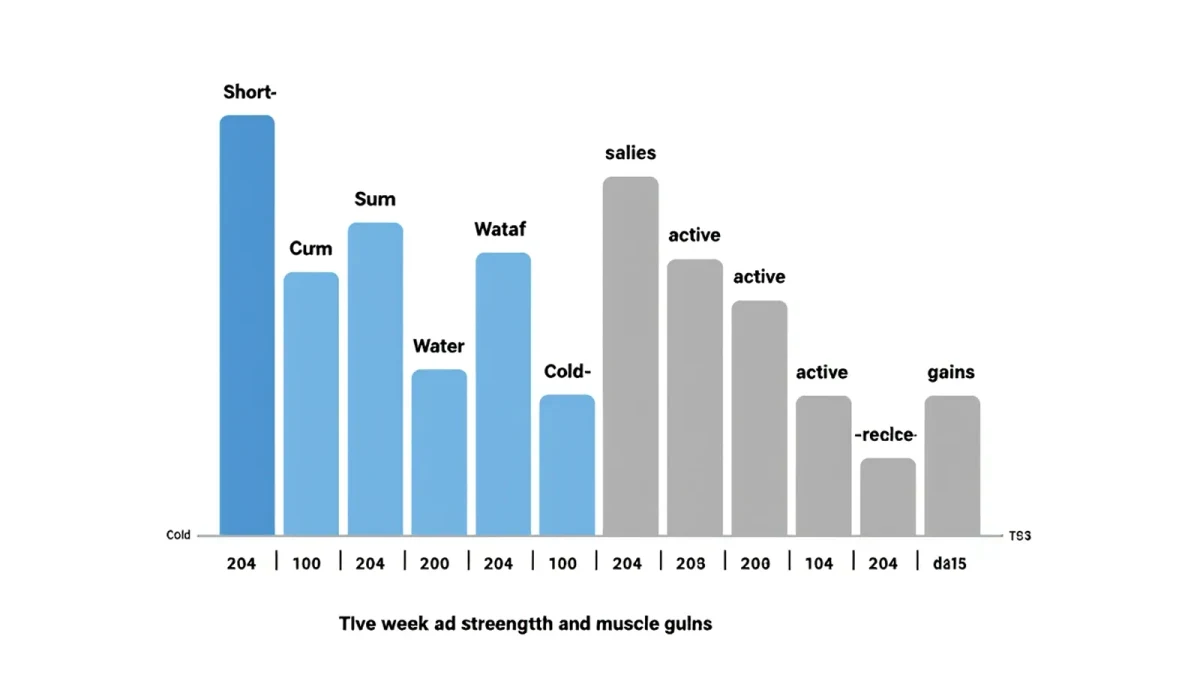
Cold water immersion — sitting in water of roughly eight to fifteen degrees Celsius after training — reduces muscle soreness in the following days, according to pooled trial data. At the same time, a 12-week controlled trial in resistance-trained men found that training followed by ice baths produced smaller gains in strength and muscle mass than the same training followed by active recovery on a bike. Both findings are real; which one matters depends on the goal.
24 News Click publishes information, not medical advice. Decisions about recovery methods, especially with cardiovascular or cold-exposure conditions involved, belong with a qualified clinician.
What did the strongest trial on adaptation find?
In a study published in the Journal of Physiology in 2015, Llion Roberts and colleagues at the University of Queensland assigned twenty-one resistance-trained men to twelve weeks of lower-body strength training, with one group plunging into ten-degree water for ten minutes after each session and a control group doing easy cycling instead. Muscle biopsies tracked what happened inside the muscle.
The cold-water group gained less strength and less muscle mass over the twelve weeks than the control group. The biopsies showed the mechanism candidates: after immersion, key anabolic signaling and satellite-cell activity — processes involved in building and repairing muscle fibers — were suppressed compared with active recovery. The trial was small and in men only, but it was controlled, long-term, and used trained subjects, which makes it the most decision-relevant study in this area.
A 2019 follow-up analysis by the same research group reinforced the direction of the effect, linking regular post-exercise cooling to smaller increases in muscle fiber cross-sectional area over a training block.
Why would cold reduce training gains?
The reasoning runs through inflammation and blood flow. Exercise damage triggers a local inflammatory response that is part of the remodeling signal — the process by which muscle adapts and grows. Cold water constricts vessels, slows blood flow, and dampens that signaling, along with anabolic enzymes activated by each session. In this frame, some inflammation is not collateral damage; it is part of the message that tells the muscle to adapt.
Human evidence for the mechanism is mostly drawn from biopsy and signaling studies like the Queensland work — small, mechanistic, and short-term. What the field does not yet show is a clean dose-response: how cold, how long, or how often immersion has to be before adaptation measurably suffers.
Do ice baths at least reduce soreness?
Yes — this part of the case is solid. Meta-analyses of cold water immersion trials, including work by Machado and colleagues published in Sports Medicine in 2016 pooling dozens of studies, find reliable reductions in delayed-onset muscle soreness and perceived fatigue in the one to four days after exercise, compared with passive rest or warm water. Markers of muscle damage in blood, such as creatine kinase, fall less consistently than the subjective soreness.
French research summarized in Dupuy and colleagues' 2018 meta-analysis in Frontiers in Physiology reached a similar conclusion: cold water immersion and massage were among the few recovery techniques with consistent evidence of improving subjective recovery and reducing soreness after damaging exercise.
When might blunted adaptation not matter?
For athletes in season, the trade-off can be reasonable. A team-sport athlete with three matches in a week may care more about being pain-free and fresh for the next match than about maximizing hypertrophy from that week's gym work. Tournament combat athletes, multi-stage cyclists, and athletes in congested competition periods face the same calculation — soreness relief now versus the last increment of training adaptation later.
Conversely, athletes in an off-season muscle-building block, where the primary goal is adaptation to resistance training, are the population in which the Roberts trial suggests ice baths cost the most. This is not a safety warning; it is a goals question.
| Goal | What evidence suggests | Key study |
|---|---|---|
| Reduce soreness in the short term | Consistent benefit versus passive rest | Machado et al., Sports Medicine, 2016 meta-analysis |
| Maximize strength and muscle gains | Immersion after lifting blunted gains in trained men | Roberts et al., Journal of Physiology, 2015 |
| Endurance adaptation | Less studied; some signaling suppression shown, outcomes unclear | Small trials, mixed results |
What about whole-body cryotherapy chambers?
Chambers exposing the body to very cold air — minus 100 degrees Celsius or colder for two to four minutes — are sometimes marketed as a stronger version of the ice bath. The research record does not support that framing. Reviews of cryotherapy chamber trials, including analyses in sports-medicine journals through the late 2010s, found the evidence base smaller and weaker than for water immersion, with few blinded comparisons and inconsistent soreness results. The adaptation question has barely been studied for chambers at all. On current evidence, the cheaper and better-tested water bath, not the chamber, is what the data describe.
What about ice baths for endurance athletes?
The endurance picture is less settled. A handful of small trials have examined cold water immersion after endurance work, with outcomes including time-trial performance and markers of mitochondrial biogenesis — the process of building cellular energy factories that drives aerobic adaptation. Some show dampened signaling after cooling; performance-level evidence of harm remains thin. Reviews in sports-medicine journals have concluded that in-season use appears acceptable for soreness management, while habitual use during blocks meant to build aerobic capacity is an open question.
What protocol details do the studies actually use?
Reading the methods sections matters more than the headlines. The soreness meta-analyses cover immersion protocols spread across a wide range — commonly water between roughly eight and fifteen degrees Celsius, for durations of about ten to fifteen minutes, taken within an hour of finishing exercise. The Machado review found that colder was not clearly better: protocols in the eleven-to-fifteen-degree range performed comparably to colder water for soreness outcomes, while eleven minutes or more of immersion showed more consistent effects than brief plunges.
The adaptation trial by Roberts and colleagues used the sharper end of that range — ten-degree water, ten minutes immediately after each of two weekly lower-body sessions across twelve weeks. Whether shorter, warmer, or less frequent immersions would spare adaptation while keeping soreness relief is genuinely unknown; no dose-finding trial has tested it. The practical consequence is that the blunting result applies most confidently to exactly the protocol that produced it: cold, immediate, and repeated after every session.
Are ice baths risky?
Cold immersion stresses the cardiovascular system: heart rate and blood pressure respond sharply in the first minutes, and shock-like gasping can occur on entry. People with cardiovascular conditions, uncontrolled hypertension, or cold-intolerance conditions such as Raynaud's phenomenon are routinely advised against unsupervised immersion, a caution stated plainly by health institutions including Mayo Clinic. Nothing in the sports evidence overrides standard medical screening for cold exposure.
One last framing: the soreness relief is measured in days, the adaptation cost in weeks. Athletes weighing ice baths should decide which currency they are spending.
Practical reading of the evidence
Soreness relief from cold water immersion is among the better-supported recovery effects in sports science. The adaptation cost is documented mainly in one well-run trial and its follow-ups, in trained men doing resistance work. An athlete choosing ice baths habitually after every strength session is, on the current evidence, trading some long-term gains for short-term comfort; an athlete using them sparingly in competition periods is making a defensible, evidence-consistent choice.